Where Is Volcanoes National Park Located in Rwanda?
Where is Volcanoes National Park located? Volcanoes National Park is situated in the far northwestern region of Rwanda, within the country’s Northern Province. The park lies near Musanze and Kinigi, close to Rwanda’s international borders with Uganda and the Democratic Republic of Congo.
The park protects Rwanda’s section of the Virunga Mountains, a dramatic chain of volcanoes shared by Rwanda, Uganda and the Democratic Republic of Congo. This transboundary ecosystem is internationally recognized for protecting endangered mountain gorillas, golden monkeys, Albertine Rift birds and diverse high-altitude habitats.
Volcanoes National Park covers approximately 160 square kilometres and protects five of the eight major volcanoes forming the Virunga Massif: Mount Karisimbi, Mount Bisoke, Mount Sabyinyo, Mount Gahinga and Mount Muhabura.
Its relative proximity to Kigali makes it one of East Africa’s most accessible mountain-gorilla destinations. The drive from Kigali usually takes approximately two and a half to three hours, depending on traffic, weather and the location of the traveler’s accommodation.
Visitors can include the park in a dedicated Rwanda safari or combine it with primate and wildlife destinations in Uganda through a professionally planned cross-border itinerary.
Where Exactly Is Volcanoes National Park?
Volcanoes National Park is located in northwestern Rwanda, with Musanze serving as the main urban gateway. Kinigi, situated near the park boundary, is home to the headquarters where visitors gather for gorilla trekking, golden monkey tracking and other permit-controlled activities.
The park is called Parc National des Volcans in French and Pariki y’Igihugu y’Ibirunga in Kinyarwanda. International visitors may encounter any of these names when reviewing maps, permits and travel documents.
| Location detail | Information |
|---|---|
| Country | Rwanda |
| Region | Northwestern Rwanda |
| Province | Northern Province |
| Main gateway | Musanze |
| Park headquarters | Kinigi |
| Approximate area | 160 square kilometres |
| Wider ecosystem | Virunga Massif |
| Best known for | Mountain gorillas, golden monkeys, volcano hiking and conservation history |
Which Volcanoes Are Found in Volcanoes National Park?
Five volcanic peaks dominate the park and surrounding landscape. Their forested slopes create habitats for primates, birds and smaller wildlife while providing some of Rwanda’s most impressive hiking scenery.
Mount Karisimbi: Rising to approximately 4,507 metres, Karisimbi is the highest mountain in the Virunga range. Reaching its summit normally requires a demanding multi-day trek.
Mount Bisoke: Bisoke is famous for the beautiful crater lake at its summit. A guided ascent is one of the park’s most popular hiking experiences, although steep and muddy sections make a reasonable fitness level important.
Mount Sabyinyo: Sabyinyo is recognized by its rugged, tooth-like summit. The mountain sits near the meeting point of Rwanda, Uganda and the Democratic Republic of Congo.
Mount Gahinga: This volcanic peak lies along the Rwanda–Uganda border. Its name is associated with the piles of volcanic stones traditionally removed from local farmland.
Mount Muhabura: Muhabura is a prominent peak visible across much of the surrounding region. Its name is commonly translated as “the guide” because of its visibility.
Not every mountain is approached from the same country or trailhead. Visitors interested in hiking should confirm the correct starting point, current trail status, permit requirements and physical difficulty before choosing a route.
How Far Is Volcanoes National Park From Kigali?
Volcanoes National Park is approximately a two-and-a-half to three-hour drive from Kigali under normal conditions. The journey travels north through Rwanda’s rolling countryside toward Musanze and Kinigi.
Travel time may change because of traffic, roadworks, weather, planned stops and the location of the traveler’s lodge. Guests participating in gorilla trekking should normally stay near the park the night before rather than attempting to depart from Kigali early on the same morning.
Can Volcanoes National Park Be Visited on a Day Trip?
Some activities can technically be arranged as a long day trip from Kigali, but an overnight stay near the park is usually more comfortable. Permit-controlled primate activities begin early, and visitors must arrive at the park headquarters in time for registration and briefing.
Staying in Musanze or Kinigi also allows travelers to rest before the trek, prepare their equipment and avoid the risk of traffic delaying their arrival.
How Do Visitors Travel From Kigali?
Private transportation with an experienced driver-guide is the most convenient option for most international travelers. It allows flexible stops, luggage storage and direct transfer to the selected accommodation.
Public transportation can reach Musanze, but additional transportation is required to continue to Kinigi, accommodation properties and activity starting points. Public buses are therefore less practical for travelers carrying trekking equipment or working with a fixed permit schedule.
Why Is the Park’s Location Important for Gorilla Conservation?
Volcanoes National Park forms part of the Virunga Massif, a transboundary mountain ecosystem shared by three countries. Rwanda’s protected forest connects ecologically with Mgahinga Gorilla National Park in Uganda and Virunga National Park in the Democratic Republic of Congo.
Mountain gorillas do not recognize international boundaries. Protecting their habitat therefore requires cooperation among conservation authorities, researchers, veterinarians and communities across the wider region.
Rangers and researchers monitor habituated gorilla families, study their health and movements, and enforce regulations designed to reduce human disturbance. Carefully controlled tourism generates revenue that supports conservation, employment and community-development initiatives.
This interconnected landscape explains why Volcanoes National Park is much more than an isolated visitor attraction. It is part of one of Africa’s most important conservation regions.
What Can I Do in Volcanoes National Park?
The park is primarily a trekking and hiking destination. Unlike Akagera National Park, Volcanoes National Park does not offer conventional savannah game drives.
Mountain gorilla trekking: Join expert trackers and guides on a regulated trek to visit an assigned habituated gorilla family.
Golden monkey tracking: Follow these fast-moving primates through the park’s high-altitude bamboo habitat.
Mount Bisoke hiking: Complete a guided ascent toward the volcanic crater lake, subject to trail conditions and permit availability.
Karisimbi trekking: Attempt a demanding multi-day climb of the Virunga range’s highest peak.
Dian Fossey memorial hike: Walk toward the former Karisoke research area and learn about Dian Fossey’s work with Rwanda’s mountain gorillas.
Birdwatching: Search for highland forest birds and Albertine Rift specialties with a knowledgeable guide.
Buhanga Eco-Park: Explore a culturally significant forest associated with Rwanda’s royal history and traditional folklore.
Musanze Caves: Discover volcanic formations created by ancient lava flows, subject to current access arrangements.
Community and cultural visits: Add music, dance, crafts, agriculture or community-guided experiences to a primate itinerary.
Why Is Volcanoes National Park Famous for Gorilla Trekking?
Volcanoes National Park protects part of the natural range of the endangered mountain gorilla. Its bamboo-covered slopes and montane forests provide food, shelter and space for several gorilla families.
Visitors holding a valid permit gather at the Kinigi headquarters for registration, group allocation and a mandatory briefing. Rangers explain the trekking rules, health requirements and responsible behavior expected in the forest.
The time required to locate a gorilla family varies considerably. Some groups may be found relatively close to the starting point, while others require a longer ascent through steep, wet and uneven terrain.
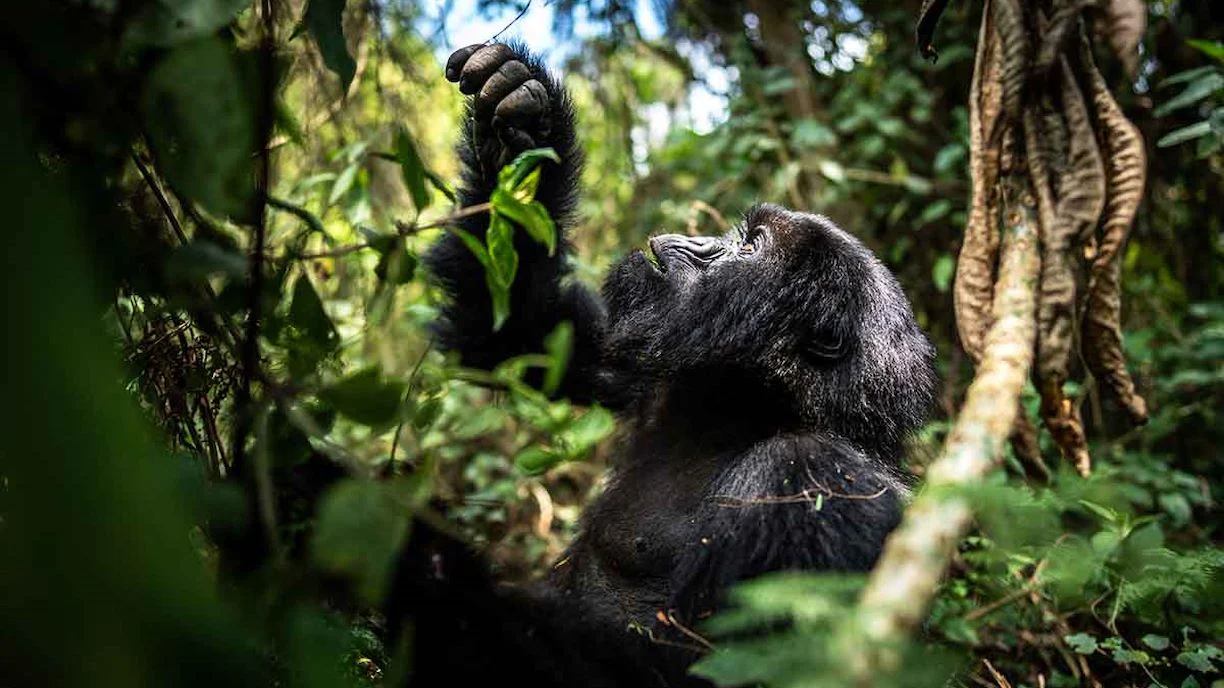
Once the assigned gorilla family is located, viewing time is strictly controlled. Visitors must follow the instructions of the ranger guide, maintain the required distance and avoid trekking when affected by a potentially contagious illness.
Travelers should book gorilla trekking well in advance because permits are limited and popular travel periods can sell out.
Why Is the Park Ideal for Golden Monkey Tracking?
Golden monkeys thrive in the bamboo habitat of the Virunga Mountains. Their bright coloring, expressive faces and energetic movements make them an excellent addition to a Rwanda primate safari.
According to Rwanda’s official tourism information, two golden monkey groups are tracked in Volcanoes National Park: one associated with the slopes of Mount Karisimbi and another within the bamboo forest around Mount Sabyinyo.
Golden monkey tracking is a separate activity from gorilla trekking and requires its own permit. It generally offers a faster-paced photographic experience because the monkeys frequently leap between bamboo stems and move through dense vegetation.
Travelers can reserve gorilla trekking for one day and golden monkey tracking for the following morning, creating a rewarding two-primate experience.
What Wildlife and Birds Live in Volcanoes National Park?
Mountain gorillas and golden monkeys receive the most attention, but the park’s montane habitats support additional mammals, birds, reptiles, amphibians and insects.
Possible mammals include forest buffaloes, bushbucks, duikers and smaller forest species. Many are shy or difficult to observe in dense vegetation, so visitors should regard any additional sighting as a bonus rather than an expectation.
The park supports approximately 200 recorded bird species. Birdwatchers may search for Albertine Rift and highland species such as the Rwenzori turaco, handsome francolin, Ruwenzori double-collared sunbird and dusky crimsonwing.
Travelers primarily interested in birds should include a dedicated excursion with a specialist guide rather than depending entirely on incidental sightings made during a gorilla trek.
When Is the Best Time to Visit Volcanoes National Park?
Volcanoes National Park can be visited throughout the year. The relatively drier periods from June to September and from December to February are popular because forest paths may be firmer and hiking conditions more manageable.
However, the park protects a high-altitude rainforest environment where showers, mud and mist are possible in every month. Waterproof clothing and suitable hiking boots remain necessary even during a generally drier season.
Visiting During the Drier Seasons
Drier periods are popular for gorilla trekking, golden monkey tracking and volcano hiking. Because visitor demand can be high, travelers should reserve permits and accommodation well ahead of their preferred dates.
Visiting During the Wetter Seasons
The wetter periods create rich green scenery and atmospheric forest conditions. Trails can become more slippery, but trekking activities generally continue unless park authorities determine that conditions are unsafe.
Rather than selecting a date based only on rainfall, travelers should consider permit availability, accommodation preference, personal fitness and the other destinations included in the itinerary.
Where Should I Stay Near Volcanoes National Park?
Accommodation is available around Kinigi, Musanze and the wider foothills of the park. Options range from modest guesthouses to high-end lodges offering premium services and extensive mountain views.
Kinigi: Staying close to the park headquarters reduces early-morning transfer time and is particularly convenient for gorilla trekking.
Musanze: The town provides a broader choice of accommodation, restaurants, shops and services while remaining within practical reach of Kinigi.
Luxury foothill lodges: Premium properties around the park may offer private villas, spa services, scenic views and personalized transfers.
The best location depends on budget, preferred comfort, selected activities and departure time. Travelers should confirm the driving time from the lodge to the correct briefing point before booking.
What Should I Pack for Volcanoes National Park?
Waterproof hiking boots: Strong grip and ankle support are important on steep, muddy trails.
Long trousers and long sleeves: Protective clothing helps reduce contact with nettles, insects and rough vegetation.
Rain jacket or poncho: Rain may occur throughout the year.
Warm layer: Early mornings and higher elevations can feel cool.
Gaiters: These help prevent mud, water and insects from entering hiking boots.
Trekking gloves: Gloves protect the hands when using plants or branches for balance.
Drinking water and permitted snacks: Carry sufficient hydration for an unpredictable trekking duration.
Waterproof camera protection: Keep cameras, phones and spare batteries protected from moisture.
Hiring a porter can make the trek more comfortable while directly supporting local employment. Porters may carry a daypack and provide assistance on difficult trail sections.
Can I Combine Volcanoes National Park With Uganda?
Yes. The park’s position near the Ugandan border makes it suitable for a combined Rwanda and Uganda safari. Travelers can continue to Mgahinga Gorilla National Park, Bwindi Impenetrable National Park or Lake Bunyonyi.
A longer journey may also include Queen Elizabeth National Park for game drives and a boat safari, creating a broader itinerary combining primates, landscapes and savannah wildlife.
International travelers must confirm current immigration, passport, visa and vaccination requirements before crossing the border. Enough time should also be allowed for immigration procedures and road transfers.
Why Visit Volcanoes National Park With Ngeye Uganda Tours?
Ngeye Uganda Tours creates personalized Rwanda and Uganda safari itineraries for travelers interested in primates, wildlife, culture and scenic exploration.
Our team can help arrange permits, private transportation, accommodation and suitable combinations of gorilla trekking, golden monkey tracking, volcano hiking and cultural activities. We also advise travelers about fitness, equipment, journey times and border procedures.
Whether you are planning a short Rwanda gorilla safari or an extended journey across Rwanda and Uganda, we can structure the itinerary to reduce rushed transfers and provide enough time for every major experience.
Contact Ngeye Uganda Tours to begin planning a professionally organized Volcanoes National Park safari in the heart of the Virunga Mountains.
Frequently Asked Questions About Volcanoes National Park
Where is Volcanoes National Park located?
Volcanoes National Park is located in northwestern Rwanda, near Musanze and Kinigi, close to the borders with Uganda and the Democratic Republic of Congo.
How far is Volcanoes National Park from Kigali?
The drive from Kigali generally takes approximately two and a half to three hours, depending on traffic, weather and the location of the traveler’s accommodation.
Where is the park headquarters?
The headquarters used for gorilla and golden monkey tracking briefings are located at Kinigi, near the park boundary.
What is Volcanoes National Park famous for?
The park is best known for mountain gorilla trekking, golden monkey tracking, volcanic landscapes, birdlife and the conservation legacy associated with Dian Fossey.
Does Volcanoes National Park offer game drives?
No. Volcanoes National Park is primarily explored through guided primate treks, volcano hikes, nature walks and birding excursions. Traditional savannah game drives are available in Akagera National Park.
Can I visit Volcanoes National Park from Uganda?
Yes. The park can be included in a cross-border itinerary from southwestern Uganda, subject to current passport, visa, vaccination and immigration requirements.
Can I see gorillas and golden monkeys on the same day?
They are separate permit-controlled activities and are normally scheduled on different days. Allocating one day to each experience creates a more comfortable itinerary.
When is the best time to visit Volcanoes National Park?
The park is open throughout the year. June to September and December to February are popular for relatively drier trekking conditions, although rainfall is possible in every month.