Apoka Safari Lodge: A Luxury Wilderness Retreat in Kidepo Valley
Apoka Safari Lodge offers something increasingly rare in African travel: an intimate stay deep inside a vast, lightly visited wilderness. Set on a rocky rise overlooking the Narus Valley in Kidepo Valley National Park, the lodge places guests close to open savannah, seasonal rivers, distant mountains and some of Uganda’s most rewarding wildlife country. Its appeal is not based on polished city-style luxury. Instead, it combines privacy, space, thoughtful comfort and an extraordinary sense of place.
For travelers designing memorable Uganda safaris, Apoka is especially attractive because the journey leads far beyond the country’s busier tourism circuit. Kidepo lies in northeastern Uganda near the borders with Kenya and South Sudan, and its geographic isolation has helped preserve the feeling of a genuine wilderness. Wide skies, rocky outcrops and sweeping grasslands replace crowds and traffic, while the lodge’s position inside the national park reduces the time spent traveling between accommodation and the wildlife-viewing areas.
This guide explains what staying at Apoka Safari Lodge is really like, what guests can do, how to reach it and when to travel. It also clarifies which details should be confirmed at the time of booking, since air schedules, activity arrangements, park fees and lodge inclusions can change. Ngeye Uganda Tours can combine the lodge with game viewing, birding, cultural encounters and other African safari experiences in a journey planned around each traveler’s interests and available time.
Where Is Apoka Safari Lodge Located?
Apoka Safari Lodge is situated in the southwestern sector of Kidepo Valley National Park, overlooking the wildlife-rich Narus Valley. According to the lodge operator, WildPlaces Africa, it is built around a picturesque rocky outcrop in the heart of the park. This location is one of its greatest strengths: guests wake within the protected landscape rather than commuting from a town beyond the park boundary.
The Narus Valley is important because its water sources support wildlife, particularly when surrounding areas become dry. From the lodge and during nearby game drives, travelers may see broad plains framed by mountain ranges, scattered sausage trees and rocky kopjes. Animals move naturally through this unfenced landscape, so sightings may occasionally occur close to the lodge. Guests must therefore follow staff instructions and should never walk away from designated areas without an authorized guide.
Kidepo’s remoteness gives Apoka a distinctive atmosphere. The nights can feel exceptionally quiet, the stars unusually bright and the horizons almost limitless. Travelers who value solitude often find this more memorable than conventional resort-style luxury. Those comparing Uganda’s national parks will notice that Kidepo feels very different from the river landscapes of Murchison Falls, the crater country of Queen Elizabeth or the forested slopes of Bwindi.
[caption id="attachment_4382" align="aligncenter" width="1424"]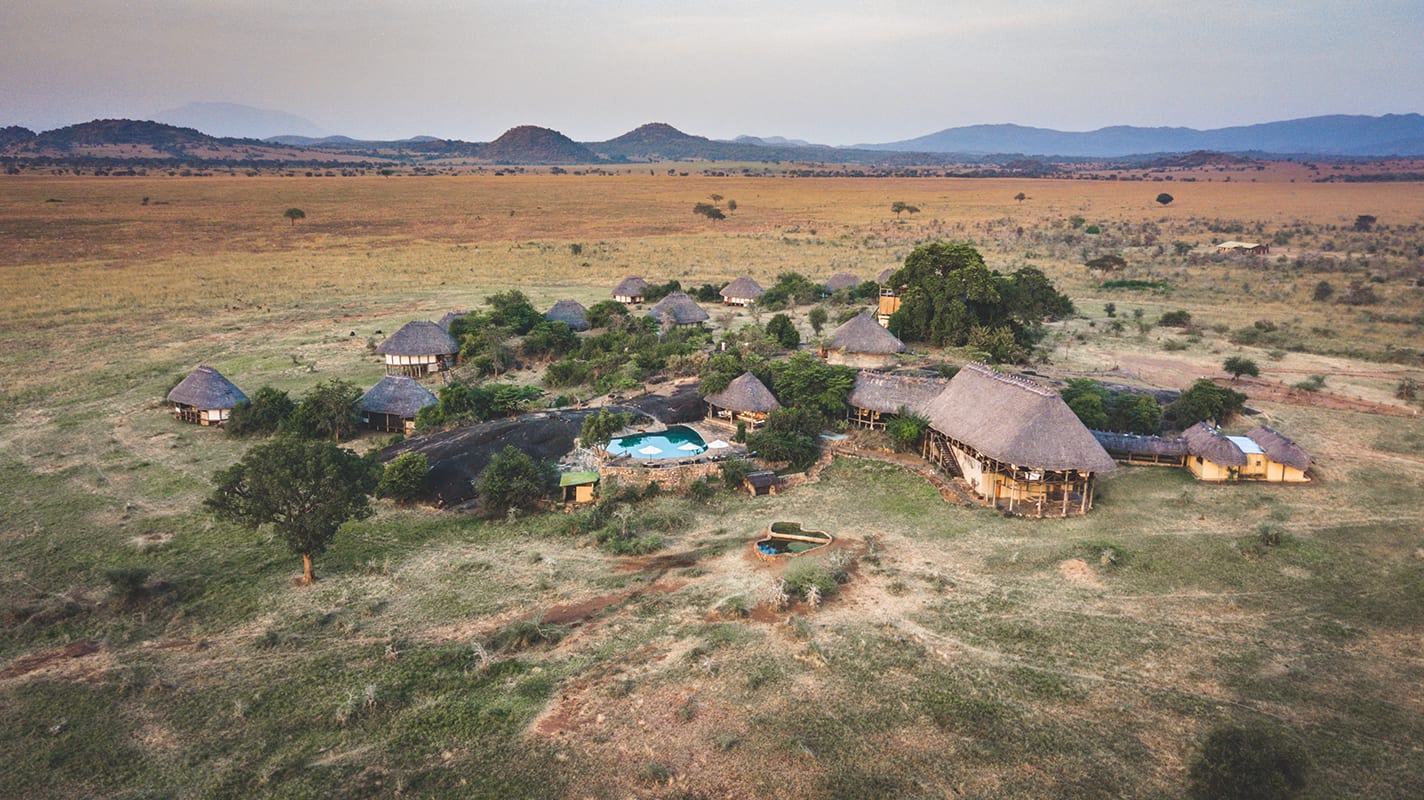 Apoka Safari Lodge in Kidepo Valley National Park.[/caption]
Accommodation and Design at Apoka Safari Lodge
Apoka Safari Lodge currently describes its accommodation as ten spacious canvas-walled chalets with thatched roofs, including double and twin configurations. Each chalet has far-reaching views and a private veranda, creating a personal space from which guests can absorb the landscape between activities. The design uses natural textures and handcrafted details that suit the rugged environment rather than competing with it.
One of the lodge’s best-known features is the outdoor rock bathtub attached to each chalet. It offers a memorable way to cool down during the day or unwind beneath the night sky. Because the bathrooms connect closely with the natural setting, guests should expect the sights and sounds of a remote bush lodge rather than the sealed environment of a conventional hotel. That connection to nature is central to the experience.
The elevated main lodge provides communal areas for dining, relaxing and enjoying views over the plains. A private dining tower may be used for special meals when available, while the large swimming pool carved into the rock is an inviting place to rest during the heat of the day. Specific room configurations, child policies, dietary arrangements and private-dining options should always be reconfirmed for the intended travel dates.
What Is the Apoka Safari Lodge Experience Like?
A stay at Apoka is shaped by the rhythm of the wilderness. Mornings often begin early, when temperatures are cooler and wildlife is active. Guests may leave for a game drive as soft light spreads across the Narus Valley, return for breakfast or lunch, then relax during the warmer middle of the day. Another activity can follow in the afternoon before sunset transforms the plains and distant mountains.
The lodge suits travelers who appreciate unhurried service and a small-scale atmosphere. With only ten chalets, the experience can feel personal, although privacy and vehicle arrangements depend on the booked package. Travelers who require a private safari vehicle, specialist photographic guide, particular meal schedule or mobility assistance should request these details in advance rather than assume they are included.
Even time spent at the lodge is part of the safari. From a veranda or the main lounge, guests can watch changing light, scan the plains with binoculars and listen for birds or distant animal calls. The pool becomes especially appealing after a dusty drive, while a quiet evening meal under Kidepo’s immense sky can be as memorable as a major wildlife sighting.
Game Drives from Apoka Safari Lodge
Guided game drives are the central activity at Apoka. The lodge advertises specially converted open safari vehicles and resident guides, giving guests the opportunity to explore the Narus Valley and other accessible areas of Kidepo. Drives are generally most productive in the cooler morning and late-afternoon hours, but routes and departure times depend on weather, road conditions, park regulations and current wildlife information.
Kidepo is known for large mammals and a remarkably varied savannah ecosystem. Possible sightings include African elephants, Cape buffaloes, Rothschild’s giraffes, zebras, Uganda kobs, hartebeest and oribi. Lions occur in the park, while leopards and cheetahs are present but much less predictable. No ethical safari operator can guarantee a particular animal, and part of Kidepo’s fascination lies in observing a wild landscape on its own terms.
The park’s open vistas are valuable for photography. Morning and evening light can reveal the contours of the valleys, while isolated trees and mountain backdrops create strong compositions even when animals are distant. Photographers should discuss vehicle sharing, equipment space and charging facilities before booking. A beanbag, lens cloth and dust protection are useful additions to a camera kit.
Guided Nature Walks and Bush Experiences
The lodge lists guided nature walks among its signature experiences. Walking changes the scale of a safari: tracks, plants, insects, birds and smaller details become more noticeable than they are from a vehicle. Depending on the route and prevailing conditions, walkers may observe wildlife across the open landscape while learning how guides interpret signs in the bush.
Walking activities are always subject to safety assessments, guide availability and the rules of the Uganda Wildlife Authority. The exact duration, minimum age and level of difficulty should be confirmed before travel. Guests must follow the guide’s instructions, wear suitable closed shoes and avoid treating a guided walk as an independent hiking opportunity.
Apoka also advertises bush breakfasts and sundowner experiences. These can add a celebratory dimension to a stay, particularly for honeymooners or families marking a special occasion. Because outdoor meals depend on weather, wildlife movements and operational considerations, they are best requested during itinerary planning and reconfirmed at the lodge.
Wildlife in Kidepo Valley National Park
The Uganda Wildlife Authority reports that Kidepo supports more than 77 mammal species. Its varied habitats include open grassland, woodland, rocky outcrops and seasonal river systems. These environments allow travelers to see familiar East African wildlife as well as species that are difficult to find elsewhere in Uganda.
Buffalo herds are a celebrated feature of Kidepo, while elephants, giraffes and plains game create classic savannah scenes. Carnivores may include lions, spotted hyenas, leopards and cheetahs, although the latter two are elusive. Smaller or less frequently discussed animals also contribute to the park’s ecological interest. A knowledgeable guide helps guests appreciate behavior, habitat and tracks rather than focusing only on a checklist of famous species.
Recent conservation developments can also change what visitors encounter. Wildlife populations, access areas and management measures evolve over time, so current information from park authorities should guide expectations. The safari is most rewarding when travelers arrive curious and flexible rather than measuring success by a guaranteed list of sightings.
Birding at Apoka and in Kidepo
Kidepo is an outstanding addition to specialized Uganda birding tours. Uganda Wildlife Authority records 476 bird species in the park, reflecting its position where different ecological regions meet. The mix of savannah, riverine vegetation and dry-country habitat attracts raptors, ground birds, seed eaters and numerous colorful woodland species.
Birding can begin around the lodge, where the quieter pace makes it possible to watch behavior and listen for calls. Drives through the park broaden the range of habitats, while experienced birders may want a private vehicle and a guide with strong identification skills. Ostriches are among Kidepo’s headline birds, but smaller species can be equally rewarding when there is time to stop and observe.
Guests should bring binoculars even if birding is not their main interest. Birds add movement and color between mammal sightings, and many are visible without leaving the safari vehicle. Serious photographers should confirm whether the vehicle setup provides the support and space required for long lenses.
Dining, Relaxation and the Rock-Carved Pool
Meals at a remote lodge form an important part of the stay because there are no nearby restaurants to visit independently. Apoka’s experience generally centers on dining at the lodge, sometimes supplemented by outdoor meals or special settings when conditions permit. Guests with allergies, medical diets, vegetarian preferences or religious requirements should share them when booking so supplies can be planned for this isolated location.
The rock-carved swimming pool is one of Apoka’s signature features. It blends into the surrounding stone and provides a cooling pause between activities. As with any unfenced wilderness property, guests should remain aware of their surroundings, supervise children closely and follow lodge guidance about moving around the grounds.
Travelers should not expect an urban spa resort with an extensive catalogue of facilities. Apoka’s version of wellbeing comes from space, stillness, fresh air, attentive hosting and immersion in the landscape. For many visitors, an afternoon on the veranda with a book is exactly the kind of luxury that Kidepo does best.
How Do You Get to Apoka Safari Lodge?
Apoka can be reached by air or road, and the better option depends on budget, itinerary length and appetite for overland travel. Domestic scheduled or charter flights can substantially reduce travel time, but schedules, baggage limits, airstrip operations and transfer arrangements vary. Every air itinerary should therefore be quoted and checked for the specific travel date.
Driving from Kampala or Entebbe is a long journey and is usually more comfortable when broken with an overnight stop. The overland route can be rewarding for travelers who want to see northern Uganda gradually unfold, but a suitable safari vehicle and realistic timing are essential. Road conditions may change with weather and maintenance, and online estimates should not be treated as guaranteed journey times.
Ngeye Uganda Tours can coordinate airport transfers, domestic flights, a private vehicle, park entry and the lodge reservation as one itinerary. This avoids gaps between individually booked services and makes it easier to respond if a flight schedule or road condition changes.
When Is the Best Time to Stay at Apoka?
Apoka and Kidepo can be visited throughout the year, and there is no single perfect month for every traveler. Drier periods generally make wildlife more dependent on persistent water sources and can improve viewing in the Narus Valley. Roads and walking conditions may also be easier, although the landscape can appear more arid and daytime heat should be expected.
Greener months bring dramatic skies, fresh vegetation and excellent photographic color. Bird activity can be rewarding, and visitor numbers may feel lower, but rain can affect roads and outdoor plans. Climate patterns are never completely predictable, so travelers should pack for both sun and showers regardless of the stated season.
Availability may matter as much as weather because Apoka has only ten chalets. Travelers with fixed dates, especially during popular holiday periods, should reserve early. A current quotation should confirm the seasonal rate, applicable park fees, included activities, meal plan, transfers, taxes and any single-room or child supplements.
What Should You Pack for Apoka Safari Lodge?
Lightweight neutral clothing works well for game drives, while a warm layer is helpful for cool early mornings and evenings. A sun hat, high-factor sunscreen, insect repellent, sunglasses and a reusable water bottle are practical essentials. Closed walking shoes are important for any guided nature activity, and a light rain jacket remains useful even outside the main rainy periods.
Binoculars significantly improve both wildlife and birding experiences. Camera users should bring sufficient memory, spare batteries and suitable dust protection. Travelers flying domestically must pay close attention to luggage restrictions, which may require soft-sided bags and strict weight limits. These limits should be confirmed with the booked airline rather than assumed from another route.
Personal medication should be carried in adequate quantities because the lodge is remote. Guests should consult an appropriate medical professional about malaria prevention, vaccinations and personal health needs before travel. Comprehensive travel insurance should cover medical emergencies, evacuation, delays and the specific safari activities included in the itinerary.
Who Is Apoka Safari Lodge Best Suited To?
Apoka is particularly well suited to wildlife enthusiasts, photographers, birders, honeymooners and repeat safari travelers who value quiet destinations. It also appeals to guests who want high comfort without losing the feeling of being in the bush. The combination of a small lodge, an unfenced setting and immediate access to Kidepo creates an experience that is both restorative and adventurous.
Families may enjoy Apoka, but parents should discuss room configurations, minimum ages for activities, supervision and private-vehicle options before confirming. Travelers with limited mobility should request precise information about pathways, vehicle access and chalet location because the lodge is built into a natural rocky environment.
Guests who prefer nightlife, shopping, extensive resort entertainment or easy independent movement may find the isolation challenging. Apoka is best appreciated by travelers who want to slow down, follow the landscape’s rhythm and accept that remote travel sometimes requires flexibility.
How Many Nights Should You Spend at Apoka?
A three-night stay works well for many itineraries because it normally allows time for several game drives, a possible guided walk and unhurried hours at the lodge. Two nights can provide an introduction, particularly when flying, but may feel rushed if arrival and departure schedules reduce the available safari time. Four nights or more suit photographers, birders and travelers who enjoy a slower pace.
The ideal stay also depends on how Kidepo fits into the wider trip. A carefully designed itinerary might continue to other Uganda national parks, combine savannah wildlife with gorilla trekking or add community-led cultural experiences. Long transfers should be balanced with enough nights at each destination to make the journey worthwhile.
Combining Apoka with a Wider Uganda Safari
Kidepo pairs naturally with Murchison Falls National Park for travelers undertaking a northern overland circuit. From there, a longer route can continue toward Kibale, Queen Elizabeth National Park and Bwindi. This creates a remarkably varied journey through savannah, river, wetland and rainforest ecosystems.
Travelers with less time can fly between key regions where schedules allow. A fly-in stay at Apoka may be followed by gorilla trekking, chimpanzee tracking or relaxation near the Nile. The best sequence depends on flight days, permit availability and the desired balance between activity and rest.
Browse Ngeye Uganda Tours’ safari packages for inspiration, but treat them as starting points rather than rigid templates. A strong itinerary accounts for seasonal conditions, realistic transfers, personal interests and an appropriate accommodation style.
Apoka Safari Lodge Rates and Booking Considerations
Apoka is positioned as a high-end, remote safari lodge, and pricing may vary by season, room occupancy, age, residency status and package inclusions. Older rate sheets found online may no longer apply. Travelers should request a dated quotation rather than base a budget on an archived price.
A complete proposal should state whether accommodation, meals, drinks, game drives, guided walks, laundry, airstrip transfers, park fees and taxes are included. It should also explain deposit requirements, cancellation conditions and any supplements. Domestic flights and private vehicles may be quoted separately depending on the itinerary.
Booking through Ngeye Uganda Tours allows the lodge to be integrated with transport, park arrangements and other destinations under one coordinated plan. Travelers can contact the safari team with their preferred dates, group size, room requirements and interests to receive a current, itemized proposal.
Responsible Travel in Kidepo Valley
Kidepo’s beauty depends on careful management of wildlife, habitat and visitor activity. Guests should respect park speed limits, remain inside vehicles unless a guide confirms otherwise, avoid pressuring animals for photographs and never feed wildlife. Noise should be kept low at sightings, and litter must leave the park with the traveler or be disposed of responsibly.
The lodge operator describes conservation and community engagement as part of its approach, including local employment and support for surrounding areas. Travelers who want to understand the specific initiatives funded by their stay can ask for current details. Responsible tourism is strongest when claims are transparent and local people share meaningful benefits.
Cultural visits should be arranged respectfully, with clear community participation and fair compensation. They should never be treated as staged access to people’s private lives. A professionally guided encounter can instead create genuine learning about the wider Karamoja region and the communities connected to this landscape.
Why Book Apoka Safari Lodge with Ngeye Uganda Tours?
Remote safaris involve more than reserving a room. Flight schedules, road transfers, park fees, activity timing and contingency planning must fit together. Ngeye Uganda Tours provides one point of coordination for the complete journey, helping travelers understand what is included and what needs to be arranged separately.
The team can tailor the trip around wildlife photography, birdwatching, a private honeymoon, family travel or a longer cross-country safari. Recommendations can be adjusted to mobility, pace and budget rather than forcing every guest into the same program.
Most importantly, professional planning creates realistic expectations. Wildlife remains wild, weather remains variable and remote logistics sometimes change. Clear communication and local coordination allow guests to enjoy the adventure with confidence while preserving the spontaneity that makes Kidepo special.
Frequently Asked Questions About Apoka Safari Lodge
Is Apoka Safari Lodge inside Kidepo Valley National Park?
Yes. Apoka Safari Lodge is located inside Kidepo Valley National Park on a rocky rise overlooking the Narus Valley. Its position gives guests convenient access to wildlife-viewing areas and an immersive wilderness setting.
How many rooms does Apoka Safari Lodge have?
The lodge operator currently lists ten canvas-walled chalets: six double chalets and four twin chalets. Exact occupancy rules and family configurations should be confirmed when requesting a quotation.
Does Apoka Safari Lodge have a swimming pool?
Yes. The lodge has a large swimming pool carved into the natural rock, one of its most distinctive features. Guests should follow lodge safety instructions because the property is unfenced and located in a wildlife area.
What activities are available at Apoka Safari Lodge?
Activities may include guided game drives, nature walks, birding, bush breakfasts and sundowner experiences. All activities remain subject to weather, safety considerations, park regulations and operational availability, so inclusions should be confirmed before travel.
What wildlife can I see near Apoka?
Possible sightings include buffaloes, elephants, giraffes, zebras, antelopes, lions and numerous birds. Leopards and cheetahs occur in Kidepo but are elusive. Wildlife sightings are never guaranteed.
Can I fly to Apoka Safari Lodge?
Fly-in arrangements may be possible using scheduled or charter domestic services, followed by an airstrip transfer. Flight days, baggage limits and transfer details change, so they must be checked for the specific itinerary.
Is Apoka Safari Lodge suitable for children?
Families may stay at Apoka, but suitability depends on children’s ages, room configuration and planned activities. Parents should confirm child policies, walking restrictions, supervision requirements and whether a private safari vehicle is advisable.
How long should I stay at Apoka Safari Lodge?
Three nights is a good starting point for many travelers, allowing time for multiple wildlife activities and relaxation. Photographers, birders and guests making a long road journey may prefer four nights or more.
Plan Your Apoka Safari Lodge Experience
Apoka Safari Lodge is memorable because it allows comfort and wilderness to coexist without diminishing the scale of Kidepo. Its ten chalets, outdoor rock tubs, panoramic verandas and rock-carved pool provide a restful base, while the surrounding park delivers expansive scenery, rich birdlife and the possibility of exceptional wildlife encounters.
For travelers seeking a remote and carefully paced Uganda safari, Apoka deserves serious consideration. Ngeye Uganda Tours can prepare a personalized itinerary and current quotation that connect the lodge with flights, transfers, park arrangements and the wider Uganda journey. The result is not simply a luxury stay, but an opportunity to experience one of East Africa’s most powerful wilderness landscapes with time and space to appreciate it.