Are Hot-Air Balloon Safaris Available in Masai Mara?
Are hot-air balloon safaris available in Masai Mara? Yes. Sunrise balloon safaris are among the most memorable activities available in Kenya’s famous Masai Mara. The experience allows travelers to float above open savannahs, winding rivers, acacia trees, and wildlife trails while the first morning light spreads across the landscape.
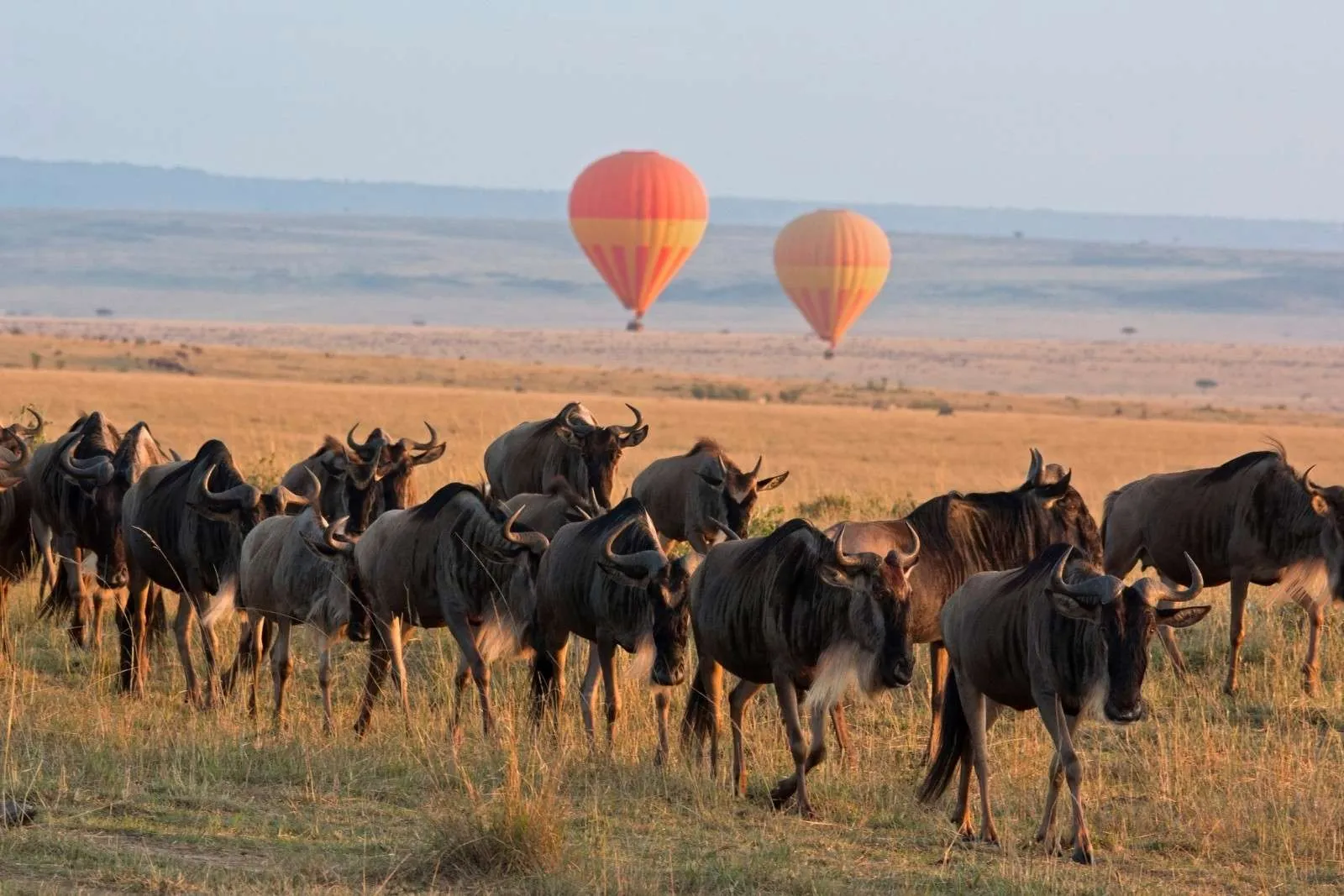
A balloon flight provides a completely different perspective from a traditional game drive. From the air, travelers can appreciate the scale of the Greater Mara ecosystem and observe how its grasslands, waterways, forests, and wildlife habitats connect. Depending on the location, season, and natural animal movements, passengers may see elephants, giraffes, buffaloes, antelopes, zebras, wildebeest, hippos, and occasionally predators below.
The Masai Mara National Reserve is located in southwestern Kenya and forms part of the wider ecosystem connected to Tanzania’s Serengeti National Park. Its extensive grasslands and abundant wildlife make it one of Africa’s leading destinations for aerial safari experiences.
Hot-air ballooning can be added to private, group, honeymoon, family, or luxury Kenya Safaris. Because flights have limited capacity and remain weather-dependent, advance reservations are strongly recommended, particularly between July and October.
What Is a Masai Mara Balloon Safari Like?
A typical balloon safari begins before sunrise. Guests are collected from their camp or lodge and transferred to a designated launch site. Exact pickup times depend on the location of the accommodation and the balloon operator, but travelers should expect a very early start.
At the launch site, the pilot and ground crew prepare and inflate the balloon. Passengers receive a safety briefing covering boarding, behavior during the flight, and the correct landing position. Guests then enter the divided basket compartments before takeoff.
The balloon normally rises around dawn when atmospheric conditions are generally calmer. Flights average approximately one hour, although the precise duration, direction, and landing point depend on wind and operational conditions.
Hot-air balloons cannot be steered in the same way as aircraft. The pilot controls altitude and uses different air currents to guide the flight while the ground crew follows by vehicle. This means every journey follows a naturally different route.
After landing, many balloon packages include a celebratory drink and a full breakfast served in the bush. Guests are then transferred back to their accommodation or reunited with their safari guide to continue their Kenya wildlife safari.
Why Is Masai Mara Ideal for a Hot-Air Balloon Safari?
Expansive Savannah Landscapes
The Masai Mara’s open plains provide wide views across the ecosystem. From the balloon basket, passengers may see rivers, wildlife tracks, forested areas, escarpments, and grasslands extending toward the horizon.
The aerial perspective reveals patterns that are difficult to appreciate from the ground. Animal trails become visible across the plains, large herds can be viewed as complete groups, and the relationship between wildlife and the surrounding habitat becomes much clearer.
Remarkable Wildlife Throughout the Year
The Greater Mara ecosystem supports resident wildlife throughout the year. Lions, elephants, buffaloes, giraffes, zebras, wildebeest, gazelles, hippos, and numerous bird species may all be encountered during a well-planned safari.
Wildlife sightings from a balloon are never guaranteed because flight paths depend on wind direction and animals move freely. Nevertheless, the scenery and sunrise views make the activity rewarding even when wildlife is farther from the balloon’s route.
Excellent Photography Opportunities
Morning light produces attractive colors, long shadows, and atmospheric views across the plains. The elevated position is especially suitable for landscape photography and images showing animals within their natural environment.
Photographers should secure cameras and mobile phones with suitable straps. Passengers must also follow the pilot’s instructions about using and storing equipment during takeoff and landing.
A Memorable Special-Occasion Experience
A balloon safari can be a beautiful addition to a honeymoon, anniversary, birthday, proposal, or family celebration. The combination of sunrise views, aerial exploration, and breakfast in the wilderness creates a distinctive experience within a wider Kenya safari itinerary.
What Wildlife Might You See from the Balloon?
Possible sightings depend on the balloon’s route, flight altitude, season, habitat, and natural wildlife movements. Animals frequently associated with the open plains include wildebeest, zebras, giraffes, elephants, buffaloes, gazelles, topis, elands, and warthogs.
Passengers may also see hippos near waterways or crocodiles along riverbanks. Lions, cheetahs, hyenas, and other predators are sometimes observed, but they can be difficult to identify from higher elevations or when concealed by vegetation.
During the Great Wildlife Migration, the aerial perspective may reveal the extraordinary scale of wildebeest and zebra herds moving through the ecosystem. However, the balloon cannot alter its route to follow a herd or guarantee views of a Mara River crossing.
A river crossing is an unpredictable natural event controlled by herd behavior, rainfall, grazing conditions, and water levels. Travelers should therefore view any crossing as a fortunate bonus rather than an assured part of the flight.
When Is the Best Time for a Masai Mara Balloon Safari?
July to October
July through October is the most popular period because migratory wildebeest and zebras may be present in the Greater Mara ecosystem. Drier conditions can also improve general wildlife visibility.
This is the busiest travel season, so balloon flights, accommodation, and preferred safari camps should be reserved well in advance. Migration timing changes from year to year and should never be treated as a fixed calendar event.
January to February
January and February can provide generally favorable safari conditions, resident wildlife viewing, and attractive morning landscapes. These months are suitable for travelers who want an excellent balloon experience without making the migration the only focus of their journey.
March to May
The wetter months bring green landscapes, dramatic skies, fewer visitors, and excellent birdlife. Balloon flights may still operate, but rainfall, wind, and changing weather can increase the possibility of delays or cancellations.
November to December
The short-rain season refreshes the grasslands and creates beautiful scenery. Conditions differ from one day to another, but this period can be rewarding for photography and quieter safari experiences.
Regardless of season, the pilot makes the final decision on whether conditions are safe for flying.
What Is Normally Included in a Balloon Safari?
Package inclusions vary by operator and location. A standard experience commonly includes transfer from selected Masai Mara camps, a pre-flight safety briefing, the balloon flight, ground-crew support, a post-flight breakfast, and return transport.
Travelers should confirm whether the quoted price includes park or conservancy charges, taxes, transfers from their particular lodge, drinks, and any other applicable fees. Accommodation, international flights, travel insurance, gratuities, and unrelated safari activities are normally separate unless clearly included in a complete package.
Prices can change according to the operator, season, applicable conservation fees, and package inclusions. For this reason, Ngeye Uganda Tours provides a current quotation rather than relying on an outdated price displayed in an older article.
Is a Hot-Air Balloon Safari Safe?
Licensed operators use trained pilots, established operating procedures, maintained equipment, safety briefings, and monitored weather information. However, ballooning remains an outdoor aviation activity, and takeoff or landing can occasionally be firm or bumpy.
Passengers must follow every instruction provided by the pilot and crew. Flights may be delayed, rescheduled, or cancelled when wind, rain, visibility, or other conditions are unsuitable.
Booking the flight before the final morning of your Masai Mara stay is advisable. This may create an opportunity to reschedule if the original flight cannot operate, although another departure cannot be guaranteed.
Who Can Join a Masai Mara Balloon Safari?
Participation requirements differ between operators. Some companies use a minimum age, while others consider both a child’s age and height because passengers must be able to see over the basket and follow safety instructions.
Guests must generally be mobile enough to enter and leave the basket, stand for the flight, and adopt the required landing position. Anyone with back, neck, hip, knee, heart, bone, mobility, or other significant medical concerns should disclose them before booking and seek medical advice where appropriate.
Balloon flights are generally unsuitable for pregnant travelers because landings can be unpredictable. Every passenger should provide accurate information during booking so that the operator can determine whether the activity is appropriate.
Because policies vary, families should never assume that a child will automatically be accepted. Ngeye Uganda Tours will verify the exact age, height, mobility, and health requirements with the selected operator before confirming the reservation.
What Should You Wear and Carry?
Morning temperatures can be cool before takeoff but become warmer after sunrise. Layered clothing allows passengers to adjust comfortably throughout the experience. Neutral safari colors and practical trousers are suitable choices.
Closed shoes are recommended because launch and landing sites may have uneven ground, grass, dust, or mud. A light jacket can be useful during the pre-dawn transfer.
Passengers may carry a camera or phone, but baggage space inside the basket is limited. Large backpacks and unnecessary equipment should be left safely at the lodge or transferred according to the operator’s instructions.
Sunscreen, a hat, and sunglasses may be helpful after landing and during breakfast. Travelers should also carry any essential personal medication and inform the operator of relevant health requirements.
How Far in Advance Should You Book?
Balloon safaris have limited passenger capacity and are especially popular during the migration season, Christmas holidays, Easter period, and other peak travel dates. Reserving the activity when confirming your accommodation is the safest approach.
Last-minute availability sometimes occurs, but it should not be relied upon for a honeymoon, anniversary, family holiday, or once-in-a-lifetime journey. Early booking also gives your safari planner time to coordinate the correct pickup location and restructure the morning’s game-drive schedule.
How Many Nights Should You Spend in Masai Mara?
A minimum stay of three nights is recommended for travelers who want to include a balloon safari without sacrificing too much game-viewing time. Four or five nights offer greater flexibility, particularly when visiting during the migration season or combining the national reserve with a private conservancy.
The balloon activity normally occupies much of the early morning, including transfers, preparation, the flight, landing, and breakfast. A longer stay allows you to enjoy the experience without making the rest of the itinerary feel rushed.
Travelers can also combine the Masai Mara with Lake Nakuru, Lake Naivasha, Amboseli, the Kenyan coast, or regional Uganda Safaris and Rwanda Safaris.
Why Book Your Balloon Safari with Ngeye Uganda Tours?
Ngeye Uganda Tours plans personalized East African journeys that combine wildlife viewing, carefully selected accommodation, dependable transport, and memorable optional experiences.
Our team coordinates your balloon reservation with the wider safari itinerary, helping to avoid unsuitable departure dates, inconvenient camp locations, and scheduling conflicts. We also confirm operator requirements, transfer arrangements, inclusions, cancellation conditions, and current prices before booking.
Your itinerary can combine the balloon safari with private game drives, responsible Maasai cultural experiences, photography excursions, birdwatching, or a stay in one of the surrounding conservancies.
Reserve Your Masai Mara Balloon Safari
Experience the Masai Mara from an unforgettable new perspective as the morning sun rises over one of Africa’s most remarkable wildlife landscapes.
Frequently Asked Questions
Are hot-air balloon safaris available in Masai Mara?
Yes. Sunrise balloon flights operate from several locations within the Greater Mara ecosystem, subject to availability and suitable weather conditions.
How long does a Masai Mara balloon flight last?
The flight normally averages approximately one hour. The complete experience takes longer because it includes lodge transfers, balloon preparation, a safety briefing, landing, and breakfast.
Are wildlife sightings guaranteed?
No. The flight path depends on wind direction, while animals move freely. Passengers may see a variety of wildlife, but no particular animal or migration event can be guaranteed.
Can children join a balloon safari?
Some children can participate, but minimum age and height requirements differ between operators. Parents should confirm the selected operator’s policy before booking.
Can pregnant travelers take a balloon flight?
Balloon safaris are generally not suitable for pregnant passengers because landing conditions can be unpredictable.
What happens when bad weather prevents the flight?
The operator may postpone, reschedule, or cancel the flight when conditions are unsafe. Refund and rescheduling terms depend on the applicable booking policy, which should be confirmed before payment.
Is a Masai Mara balloon safari worth it?
For travelers who value landscape photography, sunrise views, special-occasion experiences, and a broader perspective of the Mara, a balloon safari can be one of the journey’s most memorable highlights.