When Is the Best Time to Visit Hell’s Gate National Park?
When is the best time to visit Hell’s Gate National Park? The generally drier periods from January to February and June to October are often preferred for cycling, guided walking, landscape photography and scenic drives because the ground may be firmer and rainfall is usually less frequent. However, Hell’s Gate remains a year-round destination, and the best month ultimately depends on whether you prefer easier outdoor conditions, green scenery, birdwatching opportunities or fewer visitors.
Located near Lake Naivasha on the floor of Kenya’s Great Rift Valley, Hell’s Gate National Park is known for its towering cliffs, volcanic formations, geothermal activity and open landscapes. It is also one of the few protected areas in Kenya where visitors can walk or cycle on designated routes, subject to current regulations, weather and wildlife conditions.
The wetter periods can produce greener scenery, dramatic skies and rewarding bird activity, but rain may make some roads and trails muddy or slippery. Narrow channels and gorges present an additional flash-flood risk, meaning restricted areas must never be entered without current authorization from the Kenya Wildlife Service.
Visitors can incorporate Hell’s Gate into a short Rift Valley holiday or a longer journey through several Kenya national parks. Its proximity to Lake Naivasha makes it particularly suitable for travelers seeking a combination of physical adventure, wildlife, birdwatching and lakeside relaxation.
Quick answer: January to February and June to October often provide the most convenient conditions for walking and cycling. March to May and approximately October or November to December can bring greener landscapes, birding opportunities and fewer visitors, but rain may affect routes and activities. Always check current conditions before entering the park.
What Is the Best Overall Season for Hell’s Gate?
For most first-time visitors, a generally dry period offers the easiest introduction to Hell’s Gate. Lower rainfall can provide firmer cycling surfaces, more predictable road access and comfortable conditions for exploring the park’s open terrain.
This does not mean every day will be dry. Weather patterns in the Great Rift Valley can vary, and rain may occur during any month. Conditions should therefore be assessed immediately before the visit rather than relying exclusively on historical seasonal patterns.
Travelers planning a short schedule may prefer drier months because weather-related disruption is less likely. Photographers, birdwatchers and repeat visitors may appreciate the wetter periods for their green vegetation, atmospheric skies and quieter surroundings.
| Travel Period | Typical Advantages | Points to Consider |
|---|---|---|
| January to February | Often drier, with favorable cycling and walking conditions | Midday temperatures can feel hot during physical activities |
| March to May | Green landscapes, dramatic photography and fewer visitors | Rain may cause slippery surfaces and activity changes |
| June to October | Generally comfortable conditions for outdoor exploration | Popular travel periods may bring more visitors |
| October or November to December | Fresh vegetation and potentially rewarding bird activity | Rain timing varies and some activities may be disrupted |
These seasonal divisions are approximate rather than guaranteed. Climate variability can shift rainfall patterns, making day-to-day guidance from park staff and experienced local operators especially important.
Why Visit Hell’s Gate During the Drier Months?
January to February and June to October are commonly selected by travelers who want to cycle, walk or explore the park’s scenery with fewer weather-related complications. The park’s dust roads and designated routes may be easier to navigate when prolonged rainfall has not softened the ground.
More Convenient Cycling Conditions
Cycling is one of the experiences that distinguishes Hell’s Gate from many traditional safari parks. During relatively dry weather, routes may be firmer, reducing the difficulty created by mud and standing water.
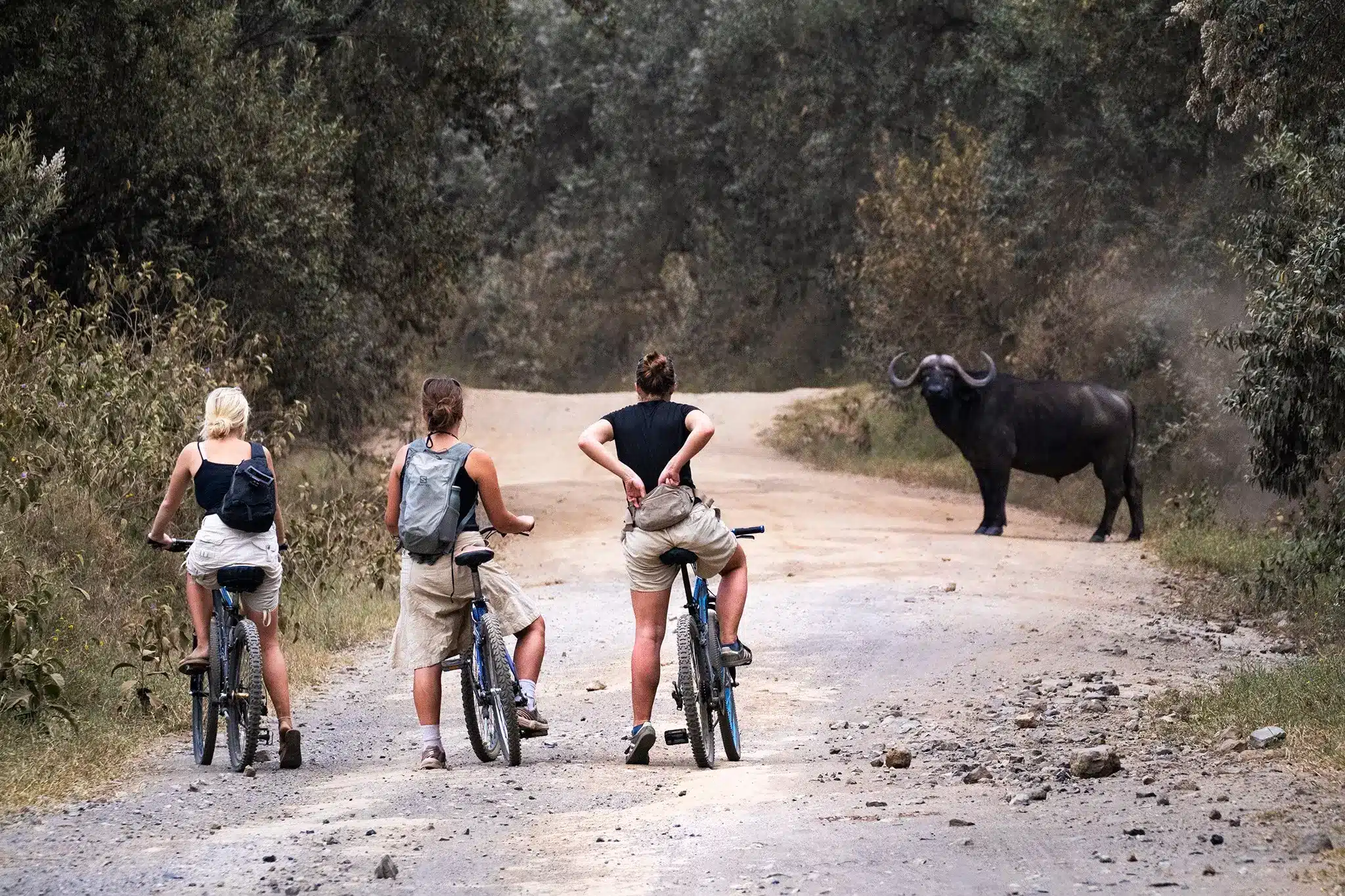
Visitors should still inspect the bicycle, carry sufficient drinking water and use suitable protective equipment. Buffaloes and other wild animals occur in the park, so cyclists must stay on approved routes, maintain a responsible distance and follow ranger instructions.
Comfortable Walking and Photography
Lower rainfall can make designated walking routes more comfortable, while clearer conditions may improve long-distance views of Fischer’s Tower, Central Tower, cliffs and open grasslands.
Early morning and late afternoon usually offer softer photographic light. The middle of the day can become hot and bright, particularly during physically demanding activities. Beginning early allows travelers to explore before the strongest heat and leaves time to adjust the program if conditions change.
Convenient Combination with Lake Naivasha
Drier conditions can make it easier to combine Hell’s Gate with a Lake Naivasha boat excursion. One practical arrangement includes a morning activity inside the park, lunch and a later lake excursion when wind and water conditions are suitable.
Travelers interested in a longer route can consider the 5-Day Kenya Wildlife Budget Safari or the 5-Day Lake Nakuru, Maasai Mara and Lake Naivasha Safari.
Is the Rainy Season a Good Time to Visit Hell’s Gate?
The rainy season can be rewarding for visitors who appreciate green landscapes, bird activity and fewer people. Moisture transforms the grasslands and surrounding hills, producing richer colors and atmospheric conditions for landscape photography.
Rain does not necessarily continue throughout the entire day. Some visits may experience short showers followed by clearer conditions. However, travelers should remain flexible because heavy rainfall can affect cycling, walking, road access and lake activities.
Greener Landscapes and Dramatic Photography
Fresh vegetation can create striking contrasts with the volcanic cliffs and rock towers. Cloud formations, changing light and geothermal steam may also add atmosphere to photographs.
Camera equipment should be carried in a water-resistant bag, and travelers should bring a lightweight rain jacket. Closed footwear with reliable grip becomes particularly important when surfaces are wet.
Potentially Rewarding Birdwatching
Hell’s Gate has recorded more than 100 bird species. Its cliffs, grasslands and rocky terrain support raptors and other birds adapted to open habitats. Wet periods may bring increased food availability and activity among some resident and migratory species.
Bird sightings remain subject to season, habitat conditions and natural movements. Travelers planning a specialist journey can explore our guide to Kenya Birding Safaris for additional destinations and planning information.
Fewer Visitors and a Slower Experience
Periods associated with increased rainfall may attract fewer travelers than Kenya’s most popular holiday months. This can create a quieter atmosphere for photography and nature observation.
Lower visitor numbers do not remove the need for advance planning. Accommodation, transport and guides should still be reserved, especially when travel dates coincide with public holidays or international school breaks.
Why Is Rainfall an Important Safety Consideration?
Rain affects more than visitor comfort. Water can make dust roads muddy, turn walking surfaces slippery and increase risk in narrow channels. Rain falling elsewhere in a catchment may reach a gorge even when conditions at the visitor’s location initially appear clear.
Ol Njorowa Gorge has been associated with serious flash-flood incidents. Access must not be assumed, and visitors should only enter locations officially confirmed as open by the Kenya Wildlife Service on the day of the visit.
Essential safety notice: Never enter a closed gorge, restricted geothermal area or unauthorized route. Flash floods can occur even when it is not raining at your exact location. Official park instructions always take priority over old itineraries, online photographs or informal advice.
If a route is unavailable, visitors can still enjoy authorized nature trails, cycling areas, game drives, rock formations, viewpoints and birdwatching. A professionally planned itinerary should include alternatives rather than depending on access to a single attraction.
What Is the Best Time for Cycling in Hell’s Gate?
Generally dry mornings are preferred for cycling because temperatures are cooler and surfaces may be firmer. Starting early also provides more time for rest stops, wildlife observation and photography.
Midday heat can make cycling more physically demanding, particularly for visitors who are not accustomed to the elevation or climate. Carrying sufficient drinking water and selecting a route appropriate for personal fitness are essential.
Cycling remains subject to current park rules and wildlife conditions. Visitors should not approach zebras, giraffes, buffaloes or other animals for photographs. A guide can help manage the route, interpret the environment and respond appropriately when wildlife is encountered.
What Is the Best Time for Walking Safaris?
Early morning during a relatively dry period usually provides comfortable conditions for walking. Cooler temperatures make physical activity more enjoyable, while softer light benefits photography.
Designated walking routes may change because of rainfall, maintenance or wildlife activity. Visitors should confirm accessible areas at the gate and consider requesting a qualified guide or security escort.
Our guide to whether walking safaris are allowed in Hell’s Gate provides additional information about responsible exploration inside the park.
What Is the Best Time for Birdwatching?
Birdwatching is possible throughout the year because Hell’s Gate supports resident species across its cliffs, grasslands and rocky habitats. Migratory movements and seasonal changes can add variety during wetter parts of the year.
Morning is often productive because birds may be more vocal and active before temperatures rise. Raptors can also use warming air currents later in the day, creating opportunities to watch soaring behavior around the cliffs.
A specialist birding itinerary should allocate enough time for slow observation instead of trying to combine every park activity in a few hours. Binoculars, a field guide or birding application and an experienced local guide can significantly improve identification.
When Is the Best Time for Wildlife Viewing?
Wildlife can be observed throughout the year, but no season guarantees particular sightings. Zebras, giraffes, elands, hartebeests, gazelles, warthogs, baboons and buffaloes may be present within the park, while smaller or secretive animals are less frequently observed.
Animals may be active during the cooler morning and late-afternoon periods. Their locations change according to water, vegetation, disturbance and natural movement. Hell’s Gate should therefore be appreciated as a scenic and active destination rather than promoted as a high-density wildlife park.
Travelers seeking a broader wildlife experience can connect the park with Lake Nakuru and the Maasai Mara through the 5-Day Lake Nakuru and Maasai Mara Safari.
How Does the Best Time Affect Lake Naivasha Activities?
Lake Naivasha is a natural complement to Hell’s Gate. Boat excursions may be available throughout the year, but wind, rain and water conditions can affect departure times and overall comfort.
Morning excursions are often selected because the water may be calmer, although the boat operator must make the final safety assessment. Visitors should wear properly fitted life jackets and maintain a responsible distance from hippos.
Birdwatching around the lake can be rewarding in different seasons. Resident birds provide year-round interest, while migratory movements may increase diversity during certain months.
How Do I Reach Hell’s Gate National Park?
Hell’s Gate is accessible by road from Nairobi through the Great Rift Valley toward Naivasha. Driving time commonly ranges from approximately two to three hours, although traffic, road conditions, stops and the selected entrance can change the journey considerably.
A private safari vehicle provides flexibility and makes it easier to carry water, cameras and cycling equipment. Professionally organized transfers also simplify park-entry procedures and onward connections to Lake Naivasha or other destinations.
Travelers should avoid planning a tight schedule immediately after an international arrival. Allowing time for traffic and unexpected delays creates a more comfortable journey.
How Many Days Should I Spend in the Area?
One full day is sufficient for a carefully selected Hell’s Gate activity and a short Lake Naivasha experience. However, one or two nights in the Naivasha region provide a more relaxed itinerary.
Two nights are particularly suitable for photographers, birdwatchers, families and travelers who want flexibility when weather affects an activity. This arrangement allows one day for Hell’s Gate and another period for Lake Naivasha, relaxation or an additional authorized excursion.
Visitors with more time can include the region in the 14-Day Kenya National Parks Safari or the 12-Day Kenya Photography Expedition.
What Should I Pack for Hell’s Gate?
Comfortable closed footwear with reliable grip is essential for walking and cycling. Lightweight, breathable clothing, a hat, sunglasses and sunscreen provide protection during exposed outdoor activities.
Travelers should also carry sufficient drinking water, energy snacks, insect repellent, personal medication, a compact first-aid kit and a lightweight waterproof jacket. Binoculars and a camera with a suitable zoom lens are useful for wildlife and birdwatching.
During wet periods, a water-resistant bag helps protect electronics and important documents. Cyclists should use suitable protective equipment and confirm that the bicycle is in good condition before starting.
Why Plan Your Hell’s Gate Safari with Ngeye Uganda Tours?
Ngeye Uganda Tours creates personalized safari itineraries based on each traveler’s dates, interests, preferred pace and accommodation level. We help clients choose an appropriate season while remaining honest about weather variability and wildlife unpredictability.
Our safari planning can combine Hell’s Gate with Lake Naivasha, Lake Nakuru, the Maasai Mara, Amboseli and other destinations. Travelers can compare available journeys through our complete collection of East African safari packages.
We coordinate transportation, accommodation and suitable activities while building alternative plans for changing weather or access conditions. Visitors can also learn more about Ngeye Uganda Tours before requesting a customized proposal.
Plan Your Hell’s Gate National Park Safari
Let our safari specialists recommend the most suitable travel period and create a personalized Hell’s Gate and Lake Naivasha itinerary.
Frequently Asked Questions About Visiting Hell’s Gate
What is the best month to visit Hell’s Gate?
January, February and the generally drier months between June and October are often convenient for cycling and walking. Actual weather varies, so current conditions should be checked before travel.
Can I visit Hell’s Gate during the rainy season?
Yes. Wet periods can offer green scenery, bird activity and fewer visitors. However, rain may make roads and trails muddy or slippery and can cause some routes to close.
What is the best time of day to enter Hell’s Gate?
Early morning is generally recommended because temperatures are cooler and visitors have more time to complete activities or adjust the itinerary if conditions change.
When is the best time for cycling?
A relatively dry morning generally provides comfortable temperatures and firmer surfaces. Cycling remains subject to current park regulations, weather and wildlife conditions.
Is Ol Njorowa Gorge open during the dry season?
Dry weather does not guarantee access. Visitors must confirm the official status of the gorge directly with the Kenya Wildlife Service on the day of their visit.
Can I combine Hell’s Gate with Lake Naivasha?
Yes. The destinations are close enough to be combined in a full-day itinerary, although spending one or two nights near Lake Naivasha provides a more relaxed experience.
Is wildlife guaranteed during the dry season?
No. Hell’s Gate is a natural ecosystem, and wildlife sightings depend on animal movements, habitat conditions, weather and the time of day.