What Makes Lake Naivasha Unique?
What makes Lake Naivasha unique? Its combination of freshwater ecology, hippos, exceptional birdlife, boat-based wildlife viewing, guided nature walks and dramatic Great Rift Valley surroundings sets it apart from many other Kenyan safari destinations. Visitors can move from the busy city of Nairobi to a peaceful lakeside environment within only a few hours by road.
Unlike Kenya’s famous savannah reserves, Lake Naivasha offers experiences both on land and on water. Travelers can take a guided boat excursion, visit Crescent Island, explore Hell’s Gate National Park, hike Mount Longonot or relax at a lakeside lodge. This variety makes the destination attractive to families, honeymooners, photographers, birdwatchers and adventure travelers.
The lake is also part of a complex environment where wildlife conservation, agriculture, tourism and local livelihoods meet. Papyrus areas, acacia woodland, open water, nearby grasslands and volcanic landscapes support diverse plants and animals while creating beautiful photographic scenery.
Ngeye Tours and Travel creates personalized Kenya journeys that combine Lake Naivasha with Lake Nakuru, the Maasai Mara and other destinations featured in our guide to Kenya national parks and safari areas.
Why Is Lake Naivasha’s Freshwater Ecosystem Special?
One of Lake Naivasha’s most distinctive qualities is that it is a freshwater lake within Kenya’s Great Rift Valley. Its water supports fish, aquatic vegetation, birds and other organisms that form the foundation of a complex ecosystem.
The lake is surrounded by varied habitats, including papyrus vegetation, acacia woodland, grassland and cultivated areas. Each environment supports different wildlife and creates opportunities for birdwatching, photography and nature interpretation.
Water levels can change in response to rainfall, inflowing rivers, evaporation and wider environmental conditions. These fluctuations affect the shoreline, vegetation, wildlife distribution and accessibility of certain lakeside areas.
Visitors should therefore understand Lake Naivasha as a living and changing environment rather than a static attraction. The view, wildlife activity and shoreline may differ between visits or seasons.
How Do Hippos Make Lake Naivasha Memorable?
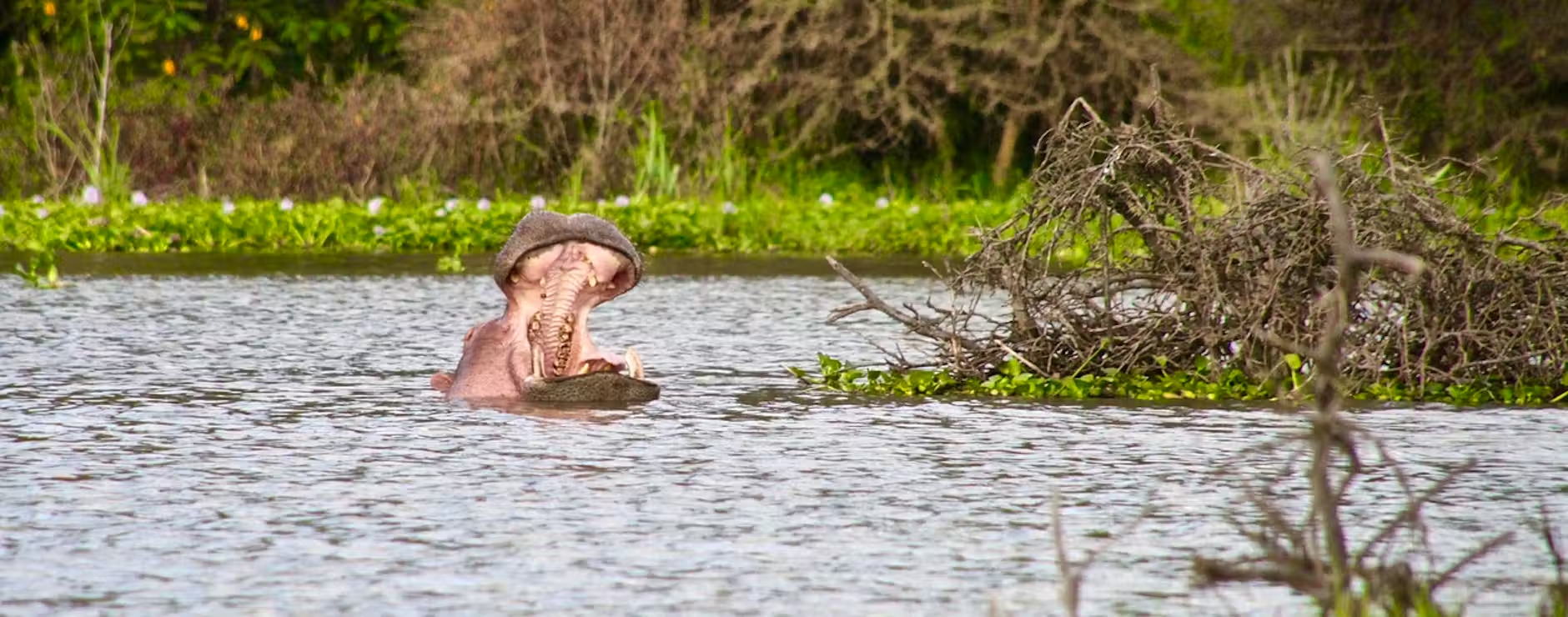
Hippos are among Lake Naivasha’s most recognizable animals. They commonly spend much of the day in the water, where they remain cool and protected from direct sunlight.
A guided boat excursion may provide opportunities to observe hippos from a responsible distance. Their eyes, ears and nostrils are positioned high on the head, allowing most of the body to remain submerged.
Despite their calm appearance, hippos are powerful and potentially dangerous wild animals. Boats must never approach too closely, block their movement or travel between a hippo and deeper water.
After dark, hippos may leave the lake to graze. Visitors staying at lakeside properties should follow staff instructions, use escorts where provided and never walk near the shoreline without guidance.
Hippo sightings can be rewarding, but their location and visibility vary. No responsible operator should guarantee a particular number of animals or an unusually close encounter.
Why Is Lake Naivasha Important for Birdwatching?
Lake Naivasha is one of Kenya’s rewarding birdwatching destinations because its freshwater, papyrus, grassland and woodland habitats attract diverse species.
African fish eagles are closely associated with the lake and may be seen perched in trees or flying over the water. Their distinctive calls form part of the Lake Naivasha atmosphere.
Kingfishers, herons, egrets, pelicans, cormorants and other water birds may be observed during guided boat excursions. Woodland areas and lodge gardens can reveal additional species that are not normally encountered over open water.
Bird activity changes according to season, weather, water levels and natural movement. Visitors should bring binoculars and allow enough time for patient observation rather than expecting every species during one short excursion.
Travelers interested in a specialist journey can explore our Kenya birding safari guide.
Why Are Boat Safaris a Defining Lake Naivasha Experience?
Many Kenyan safari destinations are explored primarily by vehicle, but Lake Naivasha allows visitors to observe wildlife and scenery from the water. This creates a quieter and visually different experience.
A guided boat excursion may include hippo viewing, birdwatching and photography along suitable sections of the lake. The route depends on wind, water conditions, wildlife movement and the selected departure point.
Morning trips can offer cooler temperatures and attractive light. Afternoon excursions may provide warm colors, although wind can become stronger later in the day.
Every passenger should wear a correctly fitting life jacket. The operator should use a maintained vessel, provide safety instructions and keep an appropriate distance from wildlife.
Travelers should protect cameras and electronic equipment from spray. Children require properly sized life jackets and close adult supervision throughout the journey.
What Makes Crescent Island Different?
Crescent Island Game Sanctuary introduces visitors to a guided walking experience beside Lake Naivasha. Depending on wildlife movement, travelers may encounter giraffes, zebras, waterbucks, wildebeest, gazelles and numerous birds.
Walking creates a different connection with the landscape. Visitors can observe tracks, plants, feeding behavior and the scale of animals from ground level rather than through a vehicle window.
However, Crescent Island should not be described as a place where people can approach animals without restrictions. The wildlife remains wild, and visitors must remain with an authorized guide.
Travelers should maintain a respectful distance, avoid loud behavior and never touch or feed animals. Parents must supervise children closely.
The sanctuary may be reached by boat or road, depending on the selected arrangement. Travelers should confirm entry fees, guiding, transfers and boat costs before booking.
How Does Hell’s Gate Add to Lake Naivasha’s Appeal?
Hell’s Gate National Park adds volcanic geology, cliffs and active adventure experiences to a Lake Naivasha itinerary. Depending on current park regulations, visitors can explore approved areas by vehicle, bicycle or on foot.
Cycling provides a memorable way to experience the landscape, but visitors should honestly assess their fitness, cycling confidence and heat tolerance. Bicycle brakes, gears, tires and helmets should be checked before departure.
Wild animals may occur along cycling routes. Buffaloes are potentially dangerous, and travelers should never attempt to pass close to them. Guidance from park authorities and professional guides must always be followed.
Walking access can change with weather. Gorges may be dangerous during rainfall because of flash floods, and visitors must never enter closed or restricted areas based on outdated travel information.
Travelers who do not want to cycle can explore by safari vehicle. This option may be better for young children, visitors with limited mobility or anyone traveling during uncertain weather.
Why Is the Volcanic Landscape Around Lake Naivasha Important?
The wider Lake Naivasha region was shaped by geological forces associated with the Great Rift Valley. Volcanic mountains, cliffs, gorges and geothermal activity contribute to the area’s dramatic scenery.
Mount Longonot rises prominently near the lake and offers a physically demanding hiking experience. Reaching the crater rim can provide broad views, but the climb requires preparation, water, sun protection and suitable footwear.
Hell’s Gate displays further evidence of volcanic and geothermal activity. Steam vents, rock formations and escarpments make the area visually different from the open grasslands usually associated with a Kenya safari.
This geological variety allows travelers to combine wildlife experiences with hiking, cycling, photography and environmental learning within one compact region.
What Makes Lake Naivasha Attractive to Photographers?
Lake Naivasha provides a broad selection of photographic subjects. Visitors can capture birds, hippos, giraffes, zebras, papyrus, reflections, volcanic scenery and changing weather conditions.
A telephoto lens is helpful for wildlife and birds, while a wide-angle lens can capture lakeside scenery and Rift Valley landscapes. A waterproof or splash-resistant camera bag is recommended during boat activities.
Morning and late afternoon generally offer softer light than midday. Mist, clouds and reflections can create atmospheric photographs even when the sky is not perfectly clear.
Wildlife should never be crowded or disturbed for a photograph. Photographers must remain with their guide and avoid separating from the group to obtain a different angle.
Travelers seeking a broader photographic journey may consider the 12-Day Kenya Photography Expedition.
Why Is Lake Naivasha Suitable for Families?
Lake Naivasha offers activities that can be adapted to different age groups. Families may combine a short boat excursion, birdwatching, a guided Crescent Island walk and time at a lodge with gardens or family facilities.
Parents should confirm the availability of child-sized life jackets before booking a boat trip. Children must remain seated when instructed and under direct adult supervision.
Crescent Island walks should be selected according to each child’s age, fitness and ability to follow safety instructions. A shorter route may be more enjoyable for younger visitors.
Families staying beside the lake must remain cautious around hippos. Children should never walk near the shoreline unattended, especially during the evening or at night.
Why Is Lake Naivasha Appealing to Honeymooners?
Lake Naivasha’s scenery and slower pace make it attractive to honeymooners. Couples can combine a private or shared boat excursion with lakeside accommodation, nature walks and relaxed dining.
The destination works particularly well as a rest stop between wildlife-intensive destinations such as Lake Nakuru and the Maasai Mara.
Couples seeking privacy should request private transfers, guiding and boat arrangements in advance. Standard excursions may be shared with other visitors.
Weather and wildlife cannot be controlled, but a balanced itinerary can prioritize comfortable accommodation, attractive times of day and enough space for relaxation.
How Does Lake Naivasha Support Local Livelihoods?
Tourism around Lake Naivasha supports boat operators, guides, accommodation providers, drivers, restaurants, farmers, craftspeople and many other local businesses.
The region is also associated with commercial agriculture, including horticulture and flower production. These industries contribute to employment and the economy while also emphasizing the importance of responsible water and environmental management.
Travelers can support the local economy by using reputable community guides, buying responsibly produced crafts and selecting tourism businesses that respect wildlife and environmental regulations.
Cultural or agricultural visits should be arranged transparently, with permission and fair benefits for the participating community or business.
Why Is Lake Naivasha Convenient From Nairobi?
Lake Naivasha is approximately 90 to 100 kilometres northwest of central Nairobi, depending on the departure point and final destination. The road journey usually takes about two to three hours under normal conditions.
Traffic, roadworks, weather and weekend congestion can increase the transfer time. Travelers should therefore treat driving durations as estimates rather than guarantees.
The relatively short distance makes Lake Naivasha suitable for a day trip, but staying overnight provides a more relaxed experience. One or two nights allow visitors to combine the lake with Crescent Island or Hell’s Gate.
A private transfer with an experienced driver-guide is convenient for travelers carrying luggage or continuing to other safari destinations.
Can Lake Naivasha Be Combined With Lake Nakuru?
Lake Naivasha and Lake Nakuru create an excellent Great Rift Valley combination. The destinations are geographically convenient but offer different experiences.
Lake Naivasha contributes boat excursions, guided nature walks and adventure activities. Lake Nakuru offers traditional game drives and opportunities to search for black and white rhinos.
Travelers can continue to the Maasai Mara for open savannah scenery and predator-viewing possibilities. The 5-Day Lake Nakuru, Maasai Mara and Lake Naivasha Safari provides an example of this circuit.
Visitors with additional time can compare other options in our collection of East Africa safari packages.
When Is the Best Time to Visit Lake Naivasha?
Lake Naivasha can be visited throughout the year. January to February and June to October generally provide comparatively drier conditions for walking, cycling and road travel.
The greener months can be excellent for birdwatching and landscape photography. Fresh vegetation and dramatic clouds create beautiful scenery, although rain may affect paths and boat schedules.
Daily weather matters more than the calendar for boat activities. Morning often provides cooler temperatures and potentially calmer water, but the operator must assess actual conditions.
Weekends and Kenyan public holidays can be busy because Naivasha is a popular escape from Nairobi. Travelers seeking a quieter atmosphere may prefer weekdays.
How Many Nights Should You Spend at Lake Naivasha?
One night is suitable for a short visit when arrival and departure times allow at least one meaningful activity. Two nights provide more flexibility for the lake, Crescent Island and Hell’s Gate.
Three nights may suit photographers, honeymooners, birdwatchers and families who want time to enjoy their accommodation rather than moving immediately to the next destination.
The best duration depends on the wider itinerary. Travelers should consider actual activity time rather than only the number of nights printed on the program.
What Should Travelers Pack for Lake Naivasha?
Useful items include comfortable closed shoes, neutral clothing, sunscreen, sunglasses, a hat and a light jacket for cool mornings and evenings.
A compact raincoat is useful throughout the year because weather can change. Binoculars improve birdwatching, while waterproof protection helps safeguard cameras during boat excursions.
Travelers should carry personal medication and reusable drinking water. Cyclists should use a properly fitting helmet and check the bicycle before entering Hell’s Gate.
Food should never be offered to wildlife. Visitors must also avoid littering or leaving plastic and other waste around the lake.
Why Explore Lake Naivasha With Ngeye Tours and Travel?
Lake Naivasha offers many possible activities, but trying to include everything within a short visit can create a rushed itinerary. Good planning balances boat excursions, walking, adventure and rest.
Ngeye Tours and Travel organizes locally guided journeys across Kenya, Uganda, Rwanda and Tanzania. We match the route, accommodation and activities to each traveler’s interests, fitness and budget.
Our team can arrange private transport, reputable boat operators, Crescent Island walks, Hell’s Gate visits and onward safaris to Lake Nakuru or the Maasai Mara.
All activities remain subject to weather, availability, wildlife movement and current regulations. We provide realistic guidance without guaranteeing conditions or encounters beyond human control.
Discover What Makes Lake Naivasha Unique
Would you like to combine Lake Naivasha with Crescent Island, Hell’s Gate, Lake Nakuru or the Maasai Mara? Share your travel dates, group size, preferred accommodation and interests with our safari planners.
Frequently Asked Questions About What Makes Lake Naivasha Unique
What is most special about Lake Naivasha?
Its freshwater ecosystem, hippos, extensive birdlife, guided boat excursions, Crescent Island walks and proximity to volcanic attractions make it distinctive.
Can visitors see hippos at Lake Naivasha?
Hippos inhabit the lake and may be observed during guided boat excursions. Boats must maintain a safe distance, and sightings cannot be guaranteed.
Is Lake Naivasha a national park?
Lake Naivasha itself is a lake and wider tourism area rather than a conventional national park. Nearby protected attractions include Hell’s Gate and Mount Longonot national parks.
Can visitors walk with animals near Lake Naivasha?
Crescent Island offers guided nature walks, but animals remain wild. Visitors must stay with their guide and maintain a respectful distance.
Is Lake Naivasha suitable for families?
Yes. Boat excursions, birdwatching and guided nature walks can suit families when appropriate safety equipment and close adult supervision are provided.
How many nights are recommended?
One night suits a short stop, while two nights provide more time to combine the lake, Crescent Island and Hell’s Gate without rushing.