When Is the Best Time to Visit Amboseli National Park?
There is no single month that suits every traveler visiting Amboseli. The best time depends on the experience you want: concentrated wildlife around wetlands, green scenery, active birdlife, quieter game drives or the clearest possible view of Mount Kilimanjaro.
For classic wildlife viewing, June to October and January to February are generally the most popular periods. These months are usually drier, vegetation is often shorter, and animals may gather near Amboseli’s dependable wetlands. Travelers interested in lush landscapes, birdwatching and fewer safari vehicles may prefer the greener months from November to May.
Situated in southern Kenya near the Tanzanian border, Amboseli National Park is renowned for free-ranging elephant families, open plains, productive swamps and magnificent views of Mount Kilimanjaro. Unlike destinations dominated by one short wildlife event, Amboseli offers rewarding game viewing throughout the year.
This guide compares the seasons honestly, helping you select a travel period that matches your interests, budget and preferred style of Kenya safari.
Amboseli at a Glance: Which Season Is Right for You?
| Travel priority | Recommended period | Why consider it? |
|---|---|---|
| General wildlife viewing | June to October | Drier conditions, shorter vegetation and wildlife gathering near dependable water |
| Clearer Kilimanjaro opportunities | January to February and June to October | Generally drier weather, although clear mountain views are never guaranteed |
| Birdwatching | November to April | Resident birds are joined by seasonal migrants, with active wetlands and fresh vegetation |
| Green landscapes | November to May | Fresh grass, reflective wetlands and dramatic skies create atmospheric photographs |
| Fewer visitors | March to May | Quieter safari areas, with possible reductions at selected accommodations |
| Most dependable roads | June to October and January to February | Less rain generally makes park tracks easier to navigate |
Seasonal patterns are approximate rather than fixed. Rain can fall during traditionally dry months, while sunny days can occur in the wet season. Current weather should always be considered alongside historical patterns.
June to October: The Classic Amboseli Safari Season
June to October is widely considered the most dependable period for traditional wildlife viewing in Amboseli. Rainfall is generally limited, grass becomes shorter and temporary water sources begin to diminish.
As surrounding areas become drier, animals may concentrate near the permanent swamps. Elephants can often be observed feeding on green wetland vegetation, while buffaloes, zebras, wildebeests, giraffes and gazelles use the surrounding plains.
What Makes This Period Attractive?
Open vegetation can make animals easier to locate. Roads are usually more accessible, and cooler mornings create comfortable conditions for game drives and photography.
Predators such as lions and spotted hyenas remain less predictable than elephants, but guides can search for tracks, alarm calls and changes in prey behavior. Early morning and late afternoon are normally the most productive periods.
Dry conditions can also create the classic visual character associated with Amboseli: golden grass, dusty plains, green wetlands and elephants beneath the immense profile of Kilimanjaro.
What Are the Trade-Offs?
This is a popular safari period, so well-positioned lodges and camps can fill early. Wildlife viewing areas may attract several vehicles, especially when predators are located.
Dry conditions can produce dust and heat haze. Although Kilimanjaro may be visible, its summit can still disappear behind cloud on any day.
Best suited to: First-time safari visitors, families, elephant enthusiasts and travelers combining Amboseli with the Masai Mara National Reserve.
January and February: Warm Days and Rewarding Game Drives
January and February form another generally drier interval and can be an excellent time to visit Amboseli. The landscape may retain some greenery from earlier rain while roads are usually easier to navigate than during the wetter months.
Warm daytime conditions make early starts particularly worthwhile. Morning game drives offer cooler temperatures, active wildlife and the best opportunity to see Mount Kilimanjaro before clouds build around its summit.
This period suits travelers who cannot visit during the middle of the year or who want to combine Amboseli with other Kenya wildlife safari destinations.
Why Photographers Like This Period
The landscape may provide a balance between dry-season visibility and patches of green vegetation. Clearer mornings, warm light and open horizons can create attractive conditions for photographing elephants, giraffes and plains game.
Successful mountain photography still requires patience. Staying two or three nights provides more opportunities than depending on a single morning.
Best suited to: Photographers, couples, honeymoon travelers and visitors planning a shorter Kenyan itinerary during the northern winter.
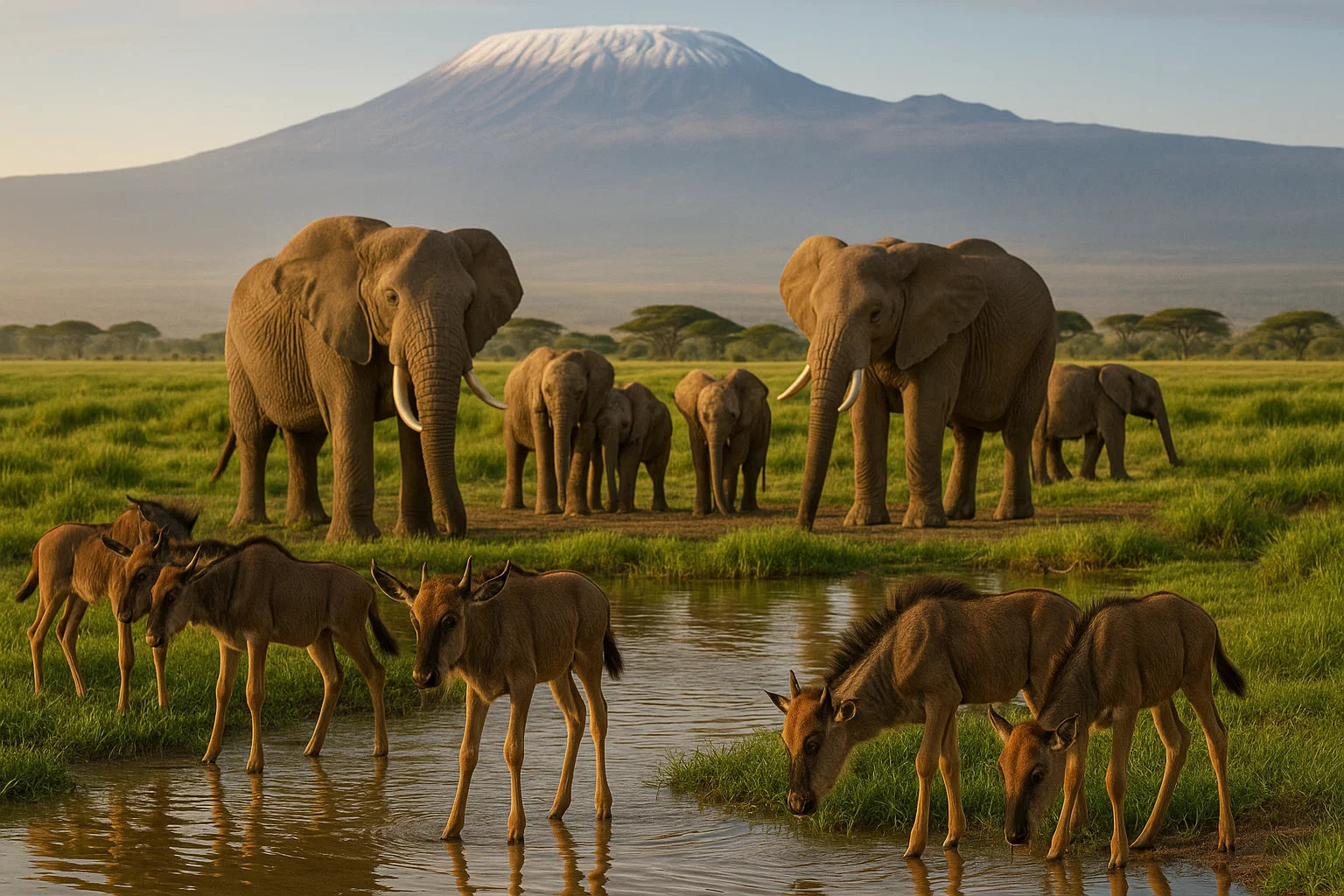
March to May: Amboseli’s Quiet Green Season
The longer rainy season generally occurs from March to May, although its timing and intensity vary. Rain transforms dusty plains into green grassland and can fill seasonal wetlands with water.
This is Amboseli at its most atmospheric. Dark clouds gather over the plains, rain-washed air can produce vivid colors, and the landscape feels dramatically different from the dry season.
Why Visit During the Rains?
Fewer vehicles can make game drives feel more private. Fresh vegetation creates beautiful backgrounds, while bird activity adds color and movement around the park’s wetlands.
Some lodges and camps may offer more attractive rates, although discounts vary and should be confirmed for the intended dates.
Rain usually falls in periods rather than continuously throughout every day. A wet morning can be followed by bright sunlight, creating excellent photographic conditions.
What Challenges Should You Expect?
Heavy rain can make some tracks muddy, lengthen driving times and restrict access to certain areas. Tall grass may make smaller animals harder to see, while wildlife can spread more widely when temporary water becomes available.
Cloud may hide Mount Kilimanjaro for extended periods. Travelers whose main priority is an unobstructed mountain photograph should consider a longer stay or choose a generally drier period.
Best suited to: Repeat safari travelers, landscape photographers, birdwatchers and visitors who value quiet surroundings more than predictable road conditions.
November and December: Short Rains and Fresh Landscapes
Short rains often begin around November, refreshing the grasslands after the long dry period. The exact timing is increasingly variable, so travelers should avoid assuming that rain will follow a precise calendar.
The return of fresh grass can change wildlife distribution, while seasonal birds add interest to the wetlands and open plains. Dramatic clouds, green vegetation and remaining areas of dry grass create varied photographic compositions.
December can become busy around international holiday dates. Travelers planning a Christmas or New Year safari should reserve suitable accommodation early.
Best suited to: Birdwatchers, holiday travelers and photographers seeking greener scenery without committing to the main long-rain period.
What Can You See in Amboseli Throughout the Year?
Amboseli’s wildlife does not disappear outside the dry season. Groundwater-fed wetlands linked to the wider Kilimanjaro ecosystem continue to support resident animals when surrounding landscapes become dry.
Elephants are the park’s defining attraction and can be observed throughout the year. Family herds may feed in the swamps, cross open grasslands or travel between the national park and surrounding community lands.
Other possible sightings include buffaloes, giraffes, zebras, wildebeests, hippos, gazelles, warthogs, lions and spotted hyenas. Cheetahs occur in the ecosystem but are less reliably encountered.
For a more detailed species guide, travelers can explore Amboseli as part of a broader Kenya safari itinerary that includes different habitats and wildlife experiences.
When Is the Best Time to See Mount Kilimanjaro?
Mount Kilimanjaro can be seen from Amboseli during any month when atmospheric conditions are clear. Early morning usually provides the best opportunity because clouds often develop as the day becomes warmer.
The generally drier months can offer favorable conditions, but visibility is never guaranteed. Dust and haze can obscure the mountain even under a blue sky, while an unexpectedly clear morning during the rainy season may produce an outstanding view.
Travelers primarily interested in Kilimanjaro photography should consider staying at least two or three nights. This creates several morning opportunities and reduces dependence on one day’s weather.
When Is the Best Time for an Amboseli Photography Safari?
The answer depends on the visual style you prefer.
Choose the dry season for: Golden grass, dusty elephant crossings, shorter vegetation and classic savannah scenery.
Choose the green season for: Fresh vegetation, reflective wetlands, dramatic clouds and richer landscape colors.
Choose early morning for: Soft light, cooler air, active animals and potential Kilimanjaro views.
Choose late afternoon for: Warm backlighting, silhouettes and colorful sunsets across the plains.
A professional guide who understands photography can help position the vehicle with consideration for light direction, background and animal movement while respecting park regulations.
When Is the Best Time for Birdwatching in Amboseli?
Birding is rewarding throughout the year because Amboseli supports wetland, grassland and woodland species. The period from approximately November to April is particularly attractive because resident birds may be joined by seasonal migrants.
Possible sightings include pelicans, herons, egrets, flamingos, crowned cranes, ostriches, secretarybirds, kingfishers and numerous raptors. The abundance of individual species changes with water levels and feeding conditions.
Serious birdwatchers can combine Amboseli with a specialized birding tour in East Africa.
Is the Dry Season Always Better Than the Green Season?
No. The dry season is generally easier for traditional game viewing, but it is not automatically better for every traveler.
A first-time visitor with limited safari time may appreciate shorter grass and dependable roads. A photographer returning to East Africa may prefer the green season’s dramatic weather and low visitor density. Birdwatchers may prioritize seasonal migrants, while families might select dates according to school holidays.
The best time is therefore the period that offers the strongest balance between your expectations, budget and flexibility.
How Long Should You Stay in Amboseli?
Two or three nights suit most travelers. This normally provides several game drives and more than one opportunity to see Mount Kilimanjaro clearly.
| Length of stay | What it offers |
|---|---|
| One night | A brief introduction, but road travel and cloud cover can limit the experience |
| Two nights | A balanced stay with morning and afternoon game drives |
| Three nights | More time for photography, birdwatching and relaxed wildlife observation |
| Four or more nights | Suitable for specialist photographers and visitors exploring the wider ecosystem |
Can You Combine Amboseli with Other Safari Destinations?
Amboseli combines especially well with the Masai Mara. The two destinations offer contrasting landscapes and complementary wildlife experiences. Amboseli is celebrated for elephants, wetlands and Kilimanjaro scenery, while the Mara is renowned for predators and its connection to the Great Wildlife Migration.
Travelers seeking a longer East African journey can continue with Uganda safaris or Rwanda safaris. These extensions can include gorilla trekking, chimpanzee tracking, birding and cultural encounters.
A thoughtfully planned regional safari allows international travelers to experience savannah wildlife, tropical forests, mountain scenery and primates during one journey.
Why Plan Your Amboseli Safari with Ngeye Uganda Tours?
Choosing travel dates is easier when the season is matched to your priorities. Ngeye Uganda Tours creates personalized East African itineraries based on wildlife interests, preferred accommodation, photography goals, budget and available time.
Our team can advise whether your dates are better suited to concentrated dry-season game viewing, green-season photography, birdwatching or a multi-destination journey. We also arrange transport, experienced guides, accommodations and regional connections.
Every safari is planned with realistic expectations. Weather varies, wildlife moves freely and Mount Kilimanjaro may be hidden even during traditionally clear months. Good planning increases opportunities without making promises that nature cannot guarantee.
Choose Your Amboseli Season
Tell us whether you dream of golden dry-season plains, green landscapes, elephant photography or exceptional birdlife, and we will design the right journey around you.
Frequently Asked Questions About Visiting Amboseli
What is the best month to visit Amboseli National Park?
July to October generally offers dependable dry-season wildlife viewing. January and February are also attractive. The best month ultimately depends on whether you prioritize animals, photography, birds, scenery or fewer visitors.
Is Amboseli worth visiting during the rainy season?
Yes. The rainy season offers green landscapes, active birdlife, dramatic skies and potentially fewer safari vehicles. Some roads may become muddy after heavy rainfall.
When is the best time to see elephants in Amboseli?
Elephants can be observed throughout the year. During drier periods, they may concentrate around the park’s wetlands, making family groups easier to locate.
When is Kilimanjaro most visible from Amboseli?
Early morning usually provides the best chance of a clear view. The mountain can be visible in any season, but cloud, haze and dust may obscure it without warning.
What is the best season for Amboseli birdwatching?
Birding is productive year-round, while November to April can be especially rewarding because seasonal migrants may join the resident species.
How many days should I spend in Amboseli?
Two or three nights are recommended for most visitors. This provides multiple game drives and more than one opportunity to see Mount Kilimanjaro.
Is Amboseli crowded during peak season?
Popular wildlife locations can attract several vehicles during the main dry-season and holiday periods. Traveling in the green season or staying longer can provide a more relaxed experience.