Where Is Mgahinga Gorilla National Park Located?
Where is Mgahinga Gorilla National Park located? Mgahinga Gorilla National Park is situated in Kisoro District in the far southwestern corner of Uganda. It lies along Uganda’s borders with Rwanda and the Democratic Republic of Congo, approximately 14 kilometres from Kisoro town.
The park protects Uganda’s section of the Virunga Mountains, a magnificent chain of volcanoes extending across Uganda, Rwanda and the Democratic Republic of Congo. It forms part of the wider Virunga Conservation Area, an internationally important ecosystem protecting mountain gorillas, golden monkeys, Albertine Rift birds and high-altitude forest habitats.
Although Mgahinga is Uganda’s smallest national park, it delivers some of the country’s most remarkable scenery and primate experiences. Its landscape is dominated by bamboo forest, montane woodland, volcanic slopes and three extinct volcanoes: Mount Muhabura, Mount Gahinga and Mount Sabyinyo.
Its border location also makes it suitable for travelers combining Uganda safaris with Rwanda safaris. Visitors can travel from Kigali to Kisoro and continue to the park, subject to current immigration, visa and border-entry requirements.
Where Exactly Is Mgahinga Gorilla National Park?
Mgahinga Gorilla National Park occupies part of the Virunga highlands in Kisoro District. Kisoro is the nearest major town and the principal service centre for travelers visiting the park.
Most visitor activities begin from the Ntebeko Visitor Centre, where travelers report for registration, briefings and ranger-guided experiences. The centre is reached by road from Kisoro through a scenic landscape of cultivated hills, villages and volcanic mountains.
| Location detail | Information |
|---|---|
| Country | Uganda |
| District | Kisoro District |
| Region | Southwestern Uganda |
| Nearest town | Kisoro |
| Main visitor area | Ntebeko Visitor Centre |
| International borders | Rwanda and the Democratic Republic of Congo |
| Wider ecosystem | Virunga Conservation Area |
| Best known for | Mountain gorillas, golden monkeys, volcano hiking and Albertine Rift birdlife |
Which Volcanoes Are Found in Mgahinga?
The park includes three of the eight major volcanoes in the Virunga range. These mountains define Mgahinga’s landscape and provide opportunities for physically demanding guided hikes.
Mount Muhabura: Rising to approximately 4,127 metres above sea level, Muhabura is the highest of Mgahinga’s three volcanoes. Its name is commonly translated as “the guide,” reflecting its prominent position in the landscape.
Mount Gahinga: Standing at approximately 3,474 metres, Mount Gahinga gives the national park its name. “Gahinga” refers to piles of volcanic stones traditionally cleared from farmland.
Mount Sabyinyo: At approximately 3,645 metres, Sabyinyo has a rugged summit whose outline resembles worn teeth. Its name is commonly interpreted as “old man’s teeth.” The mountain lies at the meeting point of Uganda, Rwanda and the Democratic Republic of Congo.
Volcano hiking should be arranged with authorized guides. Difficulty, duration and accessibility vary, and travelers should prepare for altitude, steep slopes, rapidly changing weather and demanding terrain.
How Do I Reach Mgahinga Gorilla National Park?
Travelers can reach Mgahinga by road from Kampala, Entebbe, Kigali, Bwindi or Lake Bunyonyi. Domestic flights to Kisoro provide a faster alternative for visitors with limited time.
Travelling From Kampala or Entebbe by Road
The drive from Kampala or Entebbe to Kisoro generally takes most of a day. Actual journey time depends on traffic, weather, road conditions and the number of stops made along the way.
The route passes through southwestern Uganda’s farmland, towns and highlands. A private safari vehicle with an experienced driver-guide provides greater comfort and flexibility than attempting the journey independently.
Flying From Entebbe to Kisoro
Scheduled domestic flights may operate between Entebbe and Kisoro Airstrip. The flight significantly reduces travel time, although schedules are subject to weather, passenger demand and airline operations.
After arriving at Kisoro Airstrip, travelers require a road transfer to their accommodation or the Ntebeko area. Flight and transfer arrangements should be confirmed before departure.
Travelling From Kigali, Rwanda
Kigali can provide a convenient starting point for a combined Rwanda–Uganda itinerary. Travelers drive north through Rwanda before crossing into Uganda and continuing through Kisoro to Mgahinga.
The total journey depends on traffic and the time required to complete border procedures. Visitors must verify current passport, visa, vaccination and immigration requirements before attempting a cross-border journey.
Travelling From Bwindi or Lake Bunyonyi
Mgahinga can be combined with Bwindi Impenetrable National Park and Lake Bunyonyi. Transfer times depend on the traveler’s starting point, particularly because Bwindi has several geographically separate trekking sectors.
A professionally planned route helps prevent long, tiring transfers immediately before a gorilla trek or volcano hike.
What Wildlife Can I See in Mgahinga?
Mgahinga is best known for mountain gorillas and golden monkeys, but its protected forests support many other mammals, birds and smaller creatures. Uganda Wildlife Authority reports more than 76 mammal species and over 180 recorded bird species in the park.
Mountain Gorillas
Mountain gorillas are Mgahinga’s most famous inhabitants. Visitors holding a valid permit can join a ranger-guided gorilla trekking experience to search for a habituated gorilla family.
Trekking begins with a mandatory briefing covering safety, conservation and responsible behavior. The duration of the forest search changes according to the gorillas’ location, terrain and weather. Once the assigned family is located, the viewing period is strictly controlled by Uganda Wildlife Authority regulations.
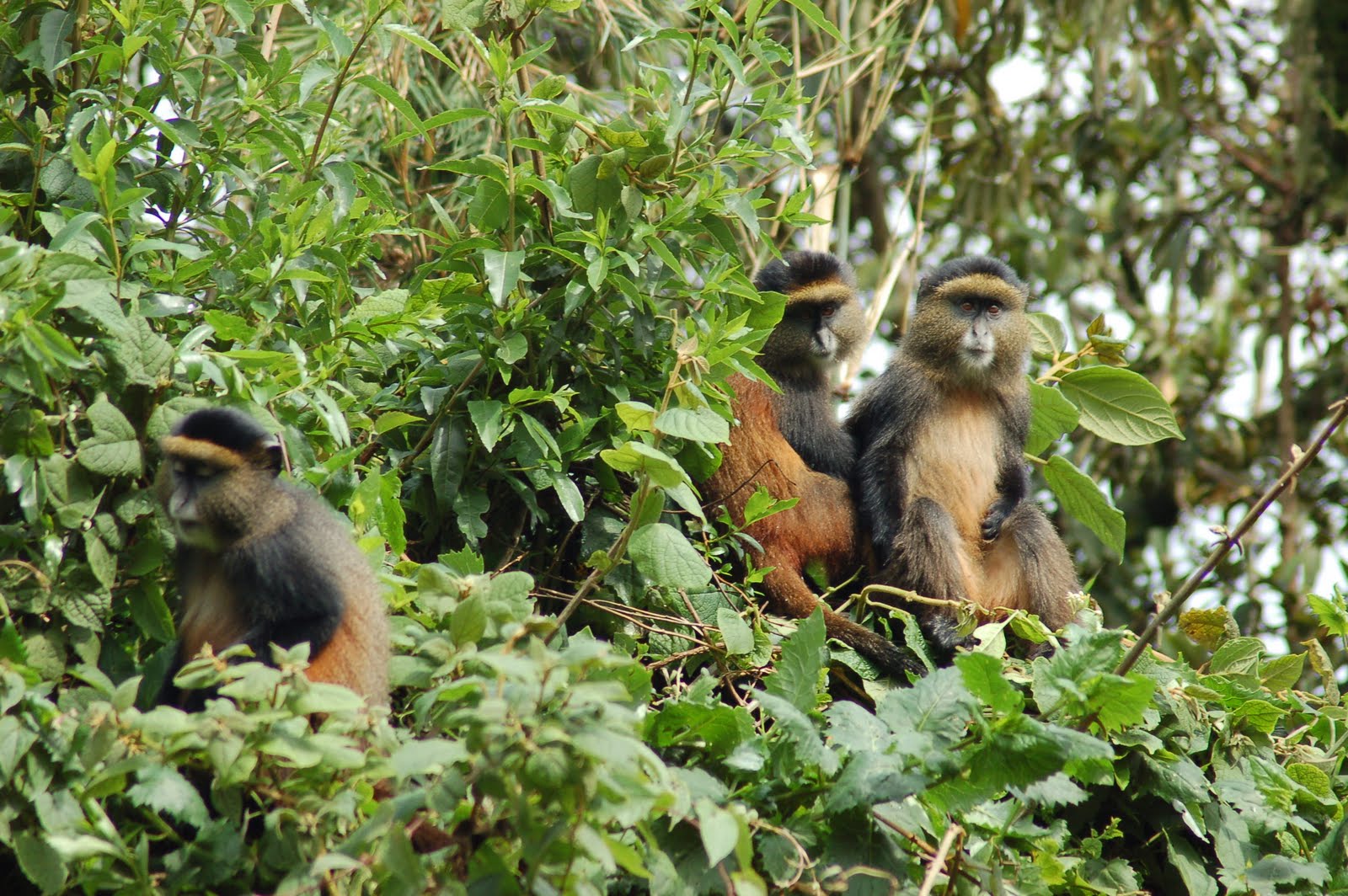
Golden Monkeys
Golden monkeys inhabit Mgahinga’s bamboo forests and are another major reason to visit the park. These active primates move quickly through the vegetation while feeding on bamboo shoots, leaves, fruit and small invertebrates.
Golden monkey tracking offers a lively encounter and can be undertaken as a separate experience from gorilla trekking. Travelers interested in primates can reserve both activities on different days.
Other Mammals
The wider park ecosystem supports forest buffaloes, elephants, giant forest hogs, bush pigs, bushbucks, leopards and smaller mammals. Most are secretive and difficult to observe in thick vegetation, so visitors should not expect the wildlife-viewing conditions found in an open savannah park.
Mgahinga does not offer conventional game drives. Wildlife is generally encountered—or its presence detected—during guided treks, birding walks and volcano hikes.
Birdlife
Mgahinga is an important destination for Uganda birding safaris. Its habitats support Albertine Rift specialties and highland forest birds, including the Rwenzori turaco, Kivu ground thrush, Rwenzori batis, regal sunbird and dusky crimsonwing.
Travelers with specific target species should request a specialist birding guide and dedicate sufficient time to slower, focused forest walks.
What Activities Are Available in Mgahinga?
Although gorilla trekking attracts the greatest international attention, Mgahinga offers several experiences that can justify a stay of two or more nights.
Gorilla trekking: Join Uganda Wildlife Authority rangers in search of a habituated mountain gorilla family.
Golden monkey tracking: Follow active golden monkeys through the park’s bamboo forest.
Golden monkey habituation experience: Spend extended time accompanying researchers and trackers, subject to current availability and permit regulations.
Volcano hiking: Attempt guided hikes on Mount Muhabura, Mount Gahinga or Mount Sabyinyo according to your fitness and preferred difficulty.
Birdwatching: Explore bamboo, montane forest and other highland habitats in search of Albertine Rift birds.
Nature walks: Discover the park’s vegetation, smaller wildlife and volcanic landscapes with an authorized guide.
Batwa cultural experience: Learn about traditional forest knowledge through a respectfully arranged, community-connected experience.
Activities, permits and trail availability should be confirmed before travel because park management requirements can change.
When Is the Best Time to Visit Mgahinga?
Mgahinga Gorilla National Park can be visited throughout the year. The relatively drier periods from June to September and December to February are popular because trails are often firmer and rainfall may be less frequent.
However, Mgahinga is a high-altitude forest environment where rain can fall at any time. Even during a drier month, visitors should carry waterproof clothing and prepare for mud, mist and changing temperatures.
Visiting During the Drier Months
Drier periods may provide more manageable hiking conditions, particularly for volcano climbing and longer forest walks. Demand for gorilla permits and accommodation can be higher, making advance reservations important.
Visiting During the Wetter Months
The wetter months usually produce lush scenery and atmospheric views across the volcanic landscape. Trails may be slippery, and cloud or rain can affect mountain visibility, but primate activities generally continue unless conditions become unsafe.
The best travel period therefore depends on personal priorities rather than a guarantee of dry weather or wildlife sightings.
How Many Days Should I Spend in Mgahinga?
| Recommended stay | Possible itinerary |
|---|---|
| Two nights | Arrival, one major activity and departure the following day. |
| Three nights | Combine gorilla trekking with golden monkey tracking or a cultural experience. |
| Four nights or more | Add volcano hiking, specialist birding or a slower exploration of the Kisoro region. |
Travelers should avoid scheduling a long road transfer on the morning of a permit-controlled activity. Staying near the park before trekking helps ensure timely arrival for the mandatory briefing.
What Should I Pack for Mgahinga?
Waterproof hiking boots: Choose footwear with strong grip and ankle support for muddy or uneven trails.
Long trousers and long sleeves: Protective clothing helps reduce contact with insects, stinging plants and rough vegetation.
Rain protection: Carry a waterproof jacket or poncho regardless of the travel season.
Warm layers: Early mornings and higher elevations can feel cold, especially when wind or mist develops.
Gardening or trekking gloves: Gloves can protect your hands when using vegetation for balance.
Drinking water and snacks: Carry adequate hydration and any food permitted or recommended for the activity.
Camera protection: Store cameras, phones and spare batteries in a waterproof bag.
Small daypack: A comfortable backpack keeps essentials secure without restricting movement.
Porters may be available for hire. Using a porter can reduce physical strain while providing income to members of surrounding communities.
Can I Combine Mgahinga With Other Safari Destinations?
Mgahinga’s location makes it a valuable component of a longer southwestern Uganda or cross-border East African itinerary.
Travelers can combine the park with Bwindi Impenetrable National Park for another gorilla trekking region, Lake Bunyonyi for rest and lakeside activities, or Queen Elizabeth National Park for game drives and a Kazinga Channel boat safari.
Cross-border itineraries may continue to Volcanoes National Park or other destinations featured in customized Rwanda safaris.
Enough time should be allocated for road travel, border procedures and rest between physically demanding activities.
Why Visit Mgahinga With Ngeye Uganda Tours?
Ngeye Uganda Tours creates customized journeys to Mgahinga Gorilla National Park according to each traveler’s schedule, interests, fitness and preferred accommodation level.
Our team can help arrange primate permits, park activities, private transportation, domestic flights, accommodation and cross-border logistics. Travelers also receive practical guidance about packing, fitness, trekking procedures and realistic journey times.
Rather than treating Mgahinga as a brief stop, we can combine its gorilla trekking, golden monkeys, volcanoes, birdlife and cultural heritage into a balanced itinerary. The park can also be linked with Bwindi, Lake Bunyonyi, Queen Elizabeth National Park or Rwanda.
Contact Ngeye Uganda Tours to plan a professionally organized Mgahinga safari and experience one of Uganda’s most dramatic mountain landscapes.
Frequently Asked Questions About Mgahinga Gorilla National Park
Where is Mgahinga Gorilla National Park located?
Mgahinga Gorilla National Park is located in Kisoro District in southwestern Uganda, along the country’s borders with Rwanda and the Democratic Republic of Congo.
What is the nearest town to Mgahinga?
Kisoro is the nearest major town and the principal gateway for travelers visiting the park.
Can I reach Mgahinga from Kigali?
Yes. Travelers can drive from Kigali, cross into Uganda and continue through Kisoro to Mgahinga. Current immigration and border requirements must be confirmed before travel.
Can I fly to Mgahinga?
Domestic flights may operate from Entebbe to Kisoro Airstrip. A road transfer is then required from the airstrip to the park or nearby accommodation.
What is Mgahinga famous for?
The park is best known for mountain gorilla trekking, golden monkey tracking, volcano hiking and Albertine Rift birdlife.
Does Mgahinga offer game drives?
No. Mgahinga is a mountainous forest park primarily explored through ranger-guided primate treks, volcano hikes, birding excursions and nature walks.
How many days should I spend in Mgahinga?
Two nights may be sufficient for one main activity, while three or four nights allow travelers to combine gorilla trekking with golden monkeys, birding, cultural experiences or volcano hiking.
When is the best time to visit Mgahinga?
The park is open throughout the year. June to September and December to February are often preferred for relatively drier trails, although rainfall is possible in every season.