Why Is Amboseli National Park Famous for Elephants?
Amboseli National Park is famous for elephants because it offers some of Africa’s most reliable opportunities to observe large, free-ranging elephant herds across open landscapes. Its permanent wetlands, expansive plains and spectacular views of Mount Kilimanjaro create one of the most recognizable wildlife scenes in East Africa.
Located in southern Kenya near the Tanzanian border, Amboseli National Park forms part of a much larger ecosystem used by elephants, livestock and other wildlife. Elephants move between the park, surrounding community lands and important wildlife corridors according to water, food and seasonal conditions.
Unlike heavily forested destinations where elephants can be difficult to observe, Amboseli contains open grasslands, seasonal lakebeds and wetlands that provide outstanding visibility. Visitors may watch family herds feeding, bathing, communicating and moving between the plains and swamps. These natural encounters make Amboseli a highlight of many Kenya safaris.
The park is also internationally important for elephant research. The Amboseli Elephant Research Project, established in 1972, has followed individually identified elephants and documented their births, deaths, family relationships and behavior. This long-term work has helped scientists and conservationists understand elephant society in exceptional detail.
For international travelers, Amboseli combines wildlife, photography, scenery, birdwatching and Maasai cultural heritage in one compact destination. Ngeye Uganda Tours can incorporate the park into a personalized Kenyan or multi-country East African safari.
What Makes Amboseli’s Elephants So Special?
Amboseli’s fame does not come from a single attraction. Its reputation has developed through a combination of abundant elephants, open viewing conditions, important water sources, long-term research and the unmistakable Mount Kilimanjaro backdrop.
Large, Free-Ranging Elephant Families
Amboseli supports an important elephant population within a cross-border ecosystem. The elephants are not confined to the boundaries of the national park. They travel through surrounding group ranches, community conservancies and wildlife corridors in response to ecological conditions.
Visitors may encounter herds led by experienced matriarchs, mothers caring for calves, young elephants playing and mature bulls moving alone or in smaller groups. Patient observation can reveal greeting ceremonies, protective behavior, feeding strategies and subtle forms of communication.
Although elephants are regularly observed in Amboseli, wildlife sightings should never be described as guaranteed. Their movements remain natural and can change with rainfall, water availability, vegetation and human activity outside the park.
Exceptional Visibility Across Open Landscapes
Amboseli’s generally open terrain makes it easier to observe elephants than in destinations dominated by dense woodland. Herds can sometimes be seen moving across broad plains from considerable distances, allowing guides to approach responsibly using designated roads.
The open environment also helps visitors understand herd structure. Instead of seeing only one elephant at a time through vegetation, travelers may be able to observe an entire family and appreciate how individuals interact.
Permanent Wetlands in a Semi-Arid Environment
One of Amboseli’s most distinctive features is the contrast between its dry plains and lush wetlands. Water moving underground from the Kilimanjaro region helps sustain important swamps, even when surrounding areas appear dry.
These wetlands attract elephants and numerous other animals. Visitors may see elephants feeding on aquatic vegetation, cooling themselves in muddy water or moving between marshes and drier feeding grounds.
The wetlands also support hippos, buffaloes, waterbirds and many smaller species, creating a productive ecosystem in an otherwise semi-arid landscape.
Some of Africa’s Remaining Large-Tusked Elephants
The wider Amboseli ecosystem is known for elephants with exceptionally large tusks. These animals are sometimes described as “super tuskers,” a term generally associated with elephants carrying unusually heavy ivory.
Such elephants are extremely rare, and seeing one should not be promised. Their survival emphasizes the importance of anti-poaching work, protected migration routes, community involvement and cooperation across the Kenya–Tanzania border.
How Has Elephant Research Made Amboseli Famous?
Amboseli is not simply a destination for photographing elephants. It is one of the world’s most significant locations for studying wild elephant behavior and social organization.
The Amboseli Elephant Research Project was formally established by Cynthia Moss in 1972. Researchers have since monitored individually recognizable elephants, recording births, deaths, associations, family histories and changes within the population.
This long-term identification makes it possible to understand elephants as individuals rather than simply as anonymous members of a herd. Researchers can follow relationships between mothers, calves, sisters, matriarchs and mature bulls across decades.
What Has Amboseli’s Research Taught Us?
Complex family relationships: Elephant herds are typically organized around related females and their young, with experienced matriarchs playing an important leadership role.
Long-term memory: Older elephants can retain valuable knowledge about water, feeding areas, social partners and potential threats.
Communication: Elephants communicate through touch, scent, visible signals, vocalizations and low-frequency sounds that can travel over substantial distances.
Care for young elephants: Calves receive attention from their mothers and other females within the family group.
Individual personalities: Decades of observation have demonstrated meaningful differences in temperament, relationships and behavior among individual elephants.
This research enriches a safari because knowledgeable guides can explain the social meaning behind what visitors observe. A group of elephants becomes a family with recognizable relationships, responsibilities and histories.
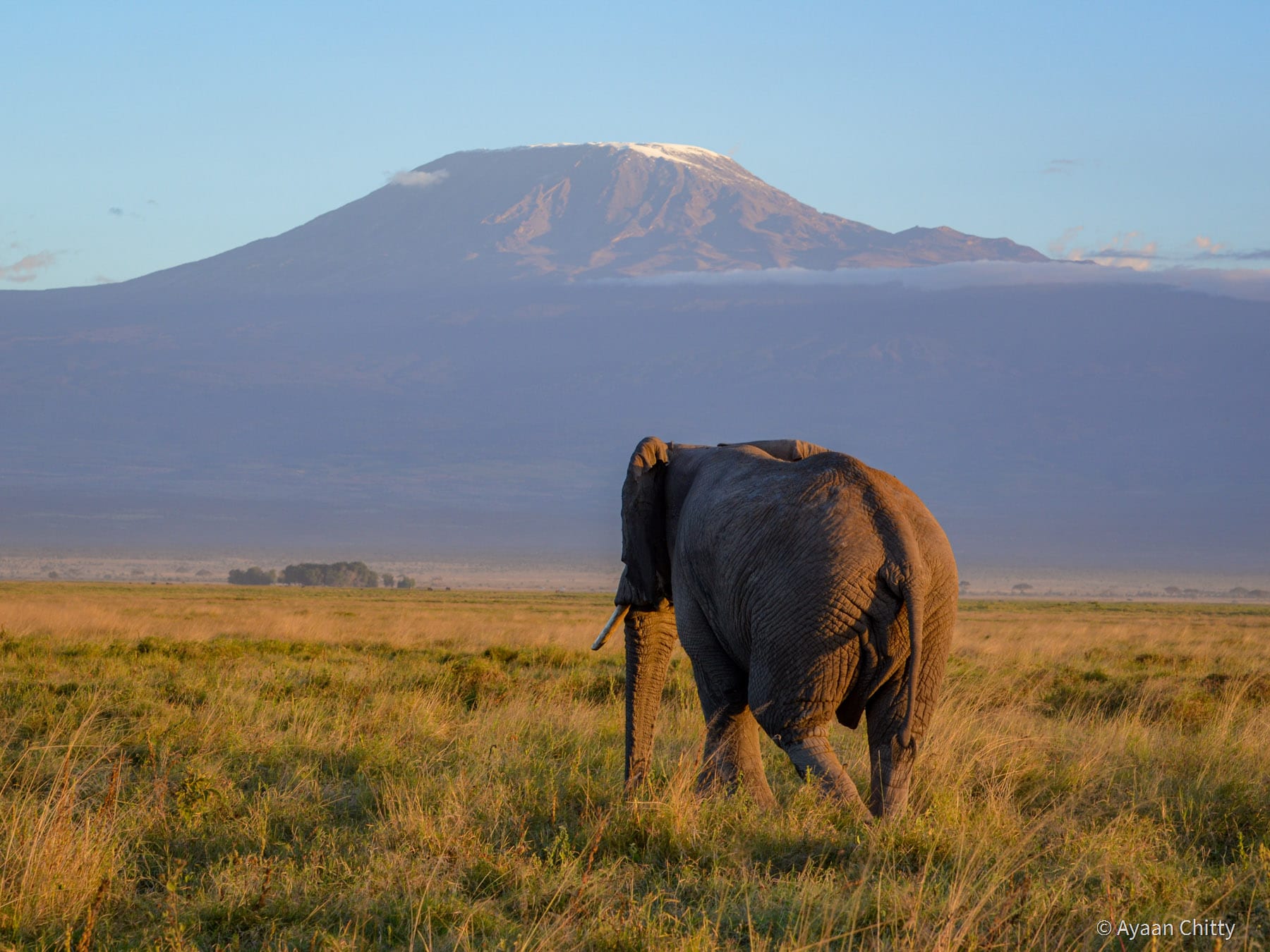
Can You See Mount Kilimanjaro from Amboseli?
Yes. On clear days, visitors can see Mount Kilimanjaro from Amboseli National Park. Although the mountain lies across the border in Tanzania, its enormous profile dominates the southern horizon and provides a remarkable backdrop for wildlife photography.
Visibility is usually best during the early morning before cloud builds around the summit. Late afternoon may also provide clear views, depending on weather conditions. Kilimanjaro’s summit is not visible at all times, so travelers should allow more than one opportunity if mountain photography is a priority.
The classic photograph of elephants crossing the plains beneath Kilimanjaro requires patience, suitable weather and the animals being in an appropriate location. Ethical guides should never disturb or pressure wildlife merely to create a photograph.
Where Are Elephants Commonly Seen in Amboseli?
Elephant locations change according to season, water and vegetation. However, wetlands and the plains connecting important feeding areas frequently provide productive viewing.
Enkongo Narok and Other Wetland Areas
The park’s swamps provide essential water and vegetation. Elephant families may spend considerable time feeding and cooling themselves around these wetlands, particularly during drier conditions.
Open Plains and Seasonal Lakebed
Elephants regularly travel across open areas when moving between water, feeding zones and land outside the park. The broad landscape can provide excellent opportunities to observe their movement while maintaining a respectful distance.
Observation Hill
Observation Hill offers elevated views across the park’s wetlands and plains. It is a valuable stop for understanding Amboseli’s geography and appreciating how water shapes wildlife distribution.
Actual sightings vary each day. Professional guides assess recent animal movements, road conditions and information from other guides before selecting a route.
What Other Wildlife Can You See in Amboseli?
Elephants may be the park’s signature attraction, but they are only part of the Amboseli experience. Game drives can also reveal buffaloes, giraffes, zebras, wildebeests, hippos, gazelles, hyenas, lions and cheetahs.
Wildlife numbers and locations vary according to environmental conditions. Predators may be less conspicuous than the elephants, so patient observation and experienced guiding remain important.
Is Amboseli Good for Birdwatching?
Amboseli is an excellent birding destination. Its wetlands, grasslands and acacia habitats support a rich variety of waterbirds, raptors and savannah species. Depending on the season, visitors may encounter pelicans, herons, egrets, kingfishers, flamingos, crowned cranes, secretarybirds and numerous birds of prey.
Travelers with a special interest in birds can combine Amboseli with a dedicated East African birding tour.
When Is the Best Time to See Elephants in Amboseli?
Elephants can be seen throughout the year, but the safari experience changes with the seasons. The best time depends on whether you prioritize concentrated wildlife, green landscapes, birdwatching, fewer visitors or Mount Kilimanjaro photography.
| Travel period | Typical conditions | Best suited to |
|---|---|---|
| June to October | Generally drier conditions, shorter vegetation and wildlife gathering near dependable water | First-time visitors, general wildlife viewing and photography |
| January to February | A typically drier interval with warm days and potentially good visibility | Elephant viewing and shorter Kenya safari itineraries |
| March to May | Longer rains, green scenery, dramatic skies and occasionally challenging roads | Landscape photography, birdwatching and quieter travel |
| November to December | Short rains, fresh vegetation and variable road conditions | Birding, green scenery and travelers avoiding peak periods |
Seasonal patterns are approximate and can vary. Climate conditions do not follow an exact calendar, so travelers should prepare for occasional rain even during traditionally dry months.
What Is the Best Time of Day for an Amboseli Game Drive?
Early morning and late afternoon are usually the most rewarding periods for game drives. Temperatures are cooler, animals may be more active, and the softer light is favorable for photography.
Morning drives offer the best chance of seeing Kilimanjaro before clouds gather around its summit. Late-afternoon drives may reveal elephants moving away from wetland feeding areas while warm sunlight spreads across the plains.
Midday can still be productive around permanent water sources. A full-day drive may therefore suit dedicated wildlife observers who prefer remaining in the park rather than returning to their lodge between activities.
How Many Days Should You Spend in Amboseli?
A stay of two or three nights is suitable for many visitors. This normally provides several game drives and more than one opportunity to see Mount Kilimanjaro clearly.
One night: Suitable for a tight itinerary, but travel time can limit wildlife viewing.
Two nights: Provides a balanced experience with morning and afternoon game drives.
Three nights: Better for photography, birdwatching and relaxed wildlife observation.
Four or more nights: Appropriate for specialized photographers and travelers who prefer a slower safari pace.
Amboseli can be combined with the Masai Mara National Reserve, other Kenyan wildlife destinations or a broader East African itinerary.
How Do You Reach Amboseli National Park?
Amboseli can be reached by road or air from Nairobi. Driving times depend on traffic, road conditions, the park gate being used and stops along the route. A road journey commonly occupies much of the day and should be planned realistically.
Scheduled or chartered flights can reduce travel time and are attractive to visitors combining several destinations. Ground transfers are then arranged between the airstrip and the selected lodge or camp.
Ngeye Uganda Tours can coordinate transport, accommodation and park activities as part of a complete Kenya wildlife safari.
Why Is the Wider Amboseli Ecosystem Important?
The national park protects only part of the landscape used by Amboseli’s elephants. Wildlife frequently moves beyond the park into community lands and conservation areas. Maintaining corridors between Amboseli, the Chyulu Hills, Tsavo and the wider Kilimanjaro landscape is therefore essential.
Elephant conservation depends on more than anti-poaching patrols. It also involves protecting habitat, reducing human-wildlife conflict, managing water and supporting communities that share their land with wildlife.
Responsible travelers can contribute by selecting reputable operators, respecting park regulations, maintaining appropriate wildlife distances and supporting conservation-minded accommodation and community initiatives.
Can You Combine Amboseli with Other East African Safaris?
Amboseli works well as part of a longer regional journey. Travelers may combine its elephants and mountain scenery with the predator-rich plains of the Masai Mara or continue to Tanzania’s northern safari circuit.
Those seeking primate encounters can connect their Kenyan holiday with Uganda safaris or Rwanda safaris. Popular additions include gorilla trekking, chimpanzee tracking, birdwatching and cultural experiences.
This combination creates a varied itinerary featuring elephants, big cats, mountain gorillas, chimpanzees and several of East Africa’s most distinctive landscapes.
Why Choose Ngeye Uganda Tours for an Amboseli Elephant Safari?
Ngeye Uganda Tours creates customized East African safari itineraries for couples, families, photographers, private groups and solo travelers. Each journey is designed around the traveler’s available time, accommodation preferences, budget and wildlife interests.
Our team can arrange suitable transportation, experienced safari guides, carefully selected lodges and a realistic game-drive schedule. We also help guests combine Amboseli with other destinations in Kenya, Uganda, Rwanda and Tanzania.
Responsible wildlife viewing remains central to a meaningful elephant safari. Our itineraries encourage patience, respect for wildlife, compliance with park regulations and support for tourism models that benefit conservation and local communities.
Plan Your Amboseli Elephant Safari
Experience remarkable elephant encounters, Mount Kilimanjaro scenery and authentic East African hospitality on a safari designed around your interests.
Frequently Asked Questions About Amboseli’s Elephants
Why is Amboseli National Park famous for elephants?
Amboseli is famous for its free-ranging elephant families, open viewing conditions, permanent wetlands, long-running elephant research and spectacular views of Mount Kilimanjaro.
Are elephant sightings guaranteed in Amboseli?
No wildlife sighting can be guaranteed. However, Amboseli is regarded as one of Africa’s most reliable destinations for observing wild elephants because of its important population, open terrain and dependable wetland habitats.
Can you see large-tusked elephants in Amboseli?
The wider Amboseli ecosystem is home to some exceptionally large-tusked elephants. These individuals are rare, move freely and should never be advertised as a guaranteed sighting.
Can you see Mount Kilimanjaro from Amboseli?
Yes, Mount Kilimanjaro can be seen from Amboseli when weather conditions are clear. Visibility is often best during the early morning before clouds develop around the summit.
What is the best month to visit Amboseli?
June to October and January to February generally provide drier conditions and productive wildlife viewing. The wetter months offer green landscapes, active birdlife and potentially fewer visitors.
How many days are recommended for Amboseli?
Two or three nights are suitable for most travelers. This allows several game drives and more than one opportunity to see elephants and Mount Kilimanjaro under favorable conditions.
Is Amboseli suitable for photographers?
Yes. Its open plains, wetlands, elephants and Kilimanjaro views make Amboseli outstanding for wildlife and landscape photography. Early morning and late afternoon usually provide the most attractive light.